

7 Steps to Choose Coffee Flavor Profiles You'll Love
Quick Summary
To choose coffee flavor profiles you enjoy, start with the specific foods and drinks you already like, such as berries, caramel or dark chocolate, then match them to a coffee family. Taste one coffee at a time with a consistent brew method and rate its sweetness, brightness and body. Your ratings reveal which coffee flavor profiles suit your palate.
- Sort your favorite foods into three families: bright and fruity, smooth and sweet, or rich and chocolatey.
- Compare two coffees that differ in only one variable, using the same dose, grind, water temperature and brew time.
- Rate each cup from 1 to 5 for sweetness, brightness and body to build your preference map.
- Treat tasting notes as a hint, since two roasters can describe the same coffee differently.
- Check the roast date, because coffee is generally at its best in the first few weeks after roasting.
Table of Contents
- How to Choose Coffee Flavor Profiles: What You Need to Know
- What a Coffee Flavor Profile Actually Tells You
- Start With the Flavors You Already Enjoy
- How to Taste Coffee and Describe What You Notice
- How Coffee Flavor by Origin Shifts Your Options
- Reading Roast Level and Coffee Roast Profiles
- Brewing Changes and Packaging Claims: What to Check
- Building Your Flavor Preference Map With Fairwood Coffee Samples
- Frequently Asked Questions
How to Choose Coffee Flavor Profiles: What You Need to Know
Last Updated: October 28, 2026
What a Coffee Flavor Profile Actually Tells You
A coffee flavor profiles entry is a short description of the tastes, smells and feel of a coffee in the cup. It might list notes like dried orange, milk chocolate or caramel.
The profile is a starting point, not a promise. A coffee's listed notes are not always fixed or equally apparent in every cup. Origin, roast and brewing all shape what you actually taste.
Here is what a profile usually covers:
- Aroma: The smell of the coffee, both dry and once brewed
- Acidity: The bright, sparkling quality, similar to citrus or berries
- Sweetness: Caramel, honey or fruit-like notes
Start With the Flavors You Already Enjoy
Before you read another bag label, look at what you already like to eat and drink. Most people can describe a dessert or a fruit more easily than they can describe a coffee, so use food as your starting vocabulary.
Think about the foods you reach for without thinking, and note the specific item rather than the category:
- Bright and fruity: berries, citrus, stone fruit, tart apples, hibiscus tea, cranberry sauce
- Smooth and sweet: vanilla, caramel, honey, maple syrup, milk chocolate, ripe banana
- Rich and chocolatey: dark chocolate, cocoa, toasted nuts, molasses, brown butter, espresso
Write down two or three specific items in each column, then mark the column where you have the most entries. That column is your starting preference, not a permanent identity. Many drinkers move between columns depending on the time of day, the weather, or whether they add milk.
Turn Your Food List Into a Coffee Shortlist
A preference list only helps if it changes what you buy. Use this simple mapping to translate your strongest food column into concrete coffee attributes:
- If you chose bright and fruity, start with washed light-to-medium roasts from Ethiopia, Kenya, or Colombia. Look for tasting notes like citrus, berry, or stone fruit, and expect higher acidity.
- If you chose smooth and sweet, start with medium roasts from Brazil, Colombia, or Guatemala, or a natural-process coffee. Look for caramel, honey, or milk chocolate notes and a rounder body.
- If you chose rich and chocolatey, start with medium-dark to dark roasts from Brazil, Sumatra, or Guatemala, or a blend built for espresso. Look for cocoa, toasted nut, or molasses notes and a heavier body.
If you are split between two columns, choose a coffee that sits between them rather than buying two bags at once. A medium roast natural-process coffee from Ethiopia, for example, often bridges fruity and sweet. Buying one bridge coffee and tasting it carefully teaches you more than buying two extremes and guessing.
A Quick Calibration Exercise
Before you commit to a full bag, try a side-by-side taste of two coffees that differ in only one variable. The easiest version is two roasts of the same origin, or two origins at the same roast level. Taste them back to back, in the same brew method, and write one word for each on three lines: sweetness, brightness, and body.
That short exercise gives you real data about your own palate, which is more useful than any label. Once you know whether you respond more to brightness or to body, you can read a flavor profile and predict whether you will enjoy the cup.
How to Taste Coffee and Describe What You Notice
Tasting coffee is a skill, and it gets easier with practice. Professionals use a method called cupping to judge aroma, taste and flavor, and you can borrow the same basic steps at home. Researchers Seninde and colleagues describe cupping as a common industry practice for this kind of evaluation.
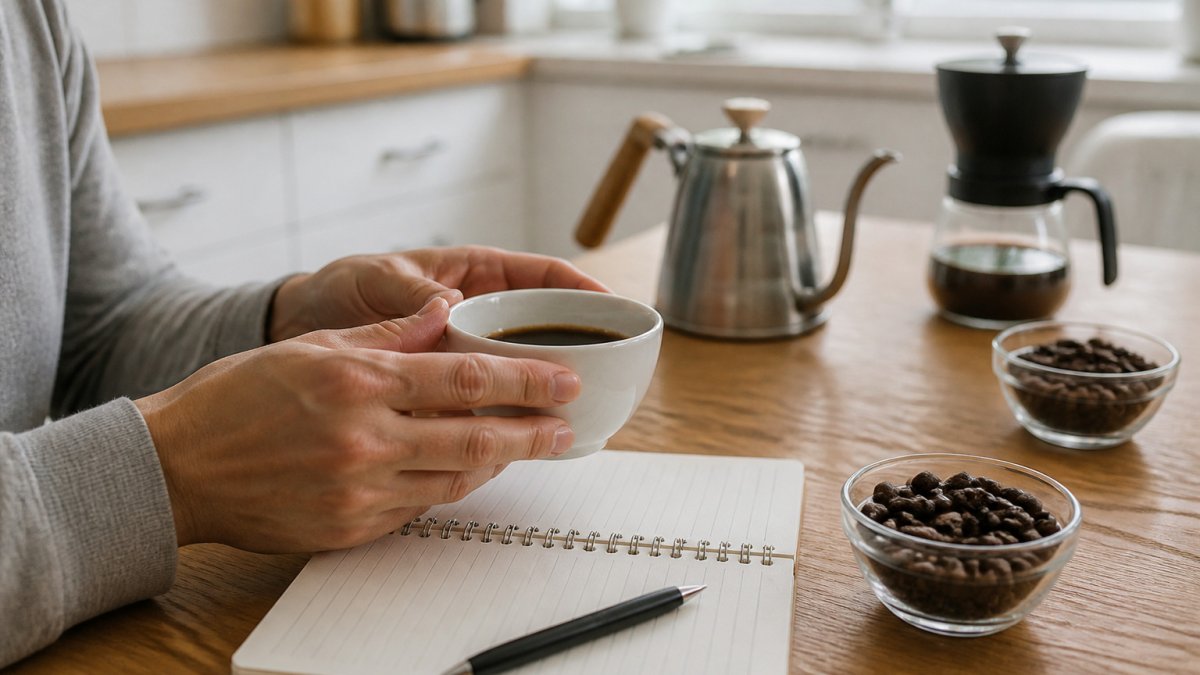
Try this simple routine with any Fairwood Coffee bag:
- Smell the ground coffee dry, then after you add hot water.
- Sip a small amount and let it spread across your tongue.
- Note whether the first taste is sweet, sour or bitter.
- Write down one or two words for the aftertaste.
- Let the coffee cool, then taste again. Flavors often shift as it warms and cools.
Keep your notes short. Words like "bright," "heavy" or "like toast" are enough.
Using the Coffee Flavor Wheel as a Vocabulary Tool
Many beginners struggle to find the right words. A coffee flavor wheel helps by moving from broad categories, such as fruity, nutty or floral, into specific descriptors like blueberry or almond. Start at the center and follow the branch that matches what you smell, then choose the narrowest word that fits.
Use the wheel for practice, not as a rule. Your own words for a flavor are just as valid as the printed ones.
Flavored Coffees Sample Pack →
How Coffee Flavor by Origin Shifts Your Options
Where a coffee grows changes how it tastes. Altitude, soil and processing all play a part, and this is where single-origin coffees become useful for comparison. Fairwood Coffee offers several single origins with different profiles.
- Colombia: Grown at 1300-1500 meters in volcanic loam, with notes of dried orange, berry and chocolate.
- Ethiopia Natural: Grown at 1700-1900 meters and dried on raised beds, with milk chocolate, fruity and caramel notes.
- Guatemala: Grown in Antigua and sun dried, with dark chocolate, bright fruit and butterscotch notes.
Try one origin at a time. Notice whether the Ethiopia tastes brighter than the Colombia, and whether the Guatemala feels heavier. Those differences are your first real data points.


Reading Roast Level and Coffee Roast Profiles
Roast level changes flavor as much as origin does. Lighter roasts usually keep more of the bean's original fruit and acidity. Darker roasts tend to bring out toasted, chocolatey and heavier notes.
Roast labels are a guide, not a guarantee. The Ethiopia Natural is listed as medium-light, while the Colombia and Guatemala are listed as medium. Two coffees with the same roast name can still taste quite different.
Brewing Changes and Packaging Claims: What to Check
Two coffees can carry the same flavor profile and still taste different in your kitchen, because brewing variables shape the cup as much as origin and roast do. This section covers brewing variables.
Brewing Variables That Change Perceived Flavor
When you compare two coffees, change only one variable at a time. The four that matter most are grind size, water temperature, coffee-to-water ratio, and brew time.
- Grind size: A finer grind exposes more surface area and usually increases extraction, which can make a coffee taste more bitter and heavier. A coarser grind slows extraction and can make the same coffee taste brighter and thinner. If a coffee tastes sharp and sour, grind finer; if it tastes harsh and dry, grind coarser.
- Water temperature: Most home brewers work in the 195-205°F range (about 90-96°C). Cooler water tends to under-extract and leave sourness; water at a rolling boil can over-extract and add bitterness. If you do not have a thermometer, let boiled water rest for about 30 seconds before pouring.
- Ratio: A common starting point is 1 gram of coffee to 15-17 grams of water. A stronger ratio (less water) increases body and intensity; a weaker ratio (more water) can make the same beans taste thin and tea-like. Keep the ratio fixed when you compare coffees.
A practical rule: if you change beans, keep every brewing variable the same for the first cup. Judge the coffee on that baseline before you adjust anything. Otherwise you are tasting your brew method, not the coffee.
How to Read Tasting Notes on a Bag
Tasting notes are a roaster's description of what they found during sample roasting and cupping. They are a hint, not a guarantee, and they are subjective by design. Two roasters can cup the same lot and write different notes. Use the label to compare coffees, not to predict an exact flavor.
When you pick up a bag, check these items in order:
- Specific notes versus vague claims. "Dried orange, milk chocolate, caramel" tells you more than "premium" or "rich." Specific notes suggest the roaster actually cupped the coffee.
- Origin and region. A single origin with a named region (for example, Antigua in Guatemala or a specific Ethiopian washing station) is usually more traceable than a broad country label.
- Processing method. Washed coffees tend to taste cleaner and brighter; natural coffees tend to taste fruitier and heavier. This one word often predicts more about the cup than the roast level.
- Roast level. Light, medium, and dark are useful guides, but they are not standardized across roasters. A medium from one roaster can be darker than a medium from another.
- Roast date. Freshness matters. Coffee is generally at its best in the first few weeks after roasting, and flavor fades over time. A roast date is more useful than a best-by date.
Freshness and Storage
Freshness changes perceived flavor more than most buyers expect. Coffee releases carbon dioxide for several days after roasting, which can make very fresh coffee taste sharp or gassy in the cup. A short rest of a few days often smooths that out. After that, oxygen, light, heat, and moisture slowly stale the beans. Store coffee in an airtight container, away from light and heat, and buy in amounts you will finish within a few weeks rather than months.
Building Your Flavor Preference Map With Fairwood Coffee Samples
You now have a list of favorite flavors, a tasting routine and a sense of how origin and roast change a cup. The next step is to put them together.
The Flavored Coffees Sample Pack at $24.99 includes six 2 oz packs, including French Vanilla, Hazelnut and Caramel.

Rate each cup from 1 to 5 on three points:
- Sweetness: How sweet did it taste?
- Brightness: How lively or acidic did it feel?
- Body: How heavy did it feel?
Rate each cup on the same three scales so you can compare them side by side.
| Attribute | Scale | What it tells you |
|---|---|---|
| Sweetness | 1 to 5 | How sweet the cup tasted |
| Brightness | 1 to 5 | How lively or acidic it felt |
| Body | 1 to 5 | How heavy it felt on the tongue |
| Flavored Coffees Sample Pack | $24.99 | Six 2 oz packs, including French Vanilla, Hazelnut and Caramel |
Frequently Asked Questions
What are the main coffee flavor profiles?
Most coffee flavor profiles fall into a few broad families: fruity and bright, nutty and chocolatey, floral and delicate, and earthy and full-bodied. Single-origin coffees from places like Ethiopia often lean toward fruity or floral notes, while coffees from Colombia and Guatemala more often show chocolate, dried fruit, or caramel. Describing a coffee by these families gives you a practical starting point before you compare specific tasting notes on a bag.
How do I know which coffee flavor profile I like?
Start with flavors you already enjoy in other foods and drinks, such as citrus, caramel, chocolate, or berries. Note which of those you reach for most, then try a sample pack to compare them side by side. Fairwood Coffee's Flavored Coffees Sample Pack includes six 2oz packs, including French Vanilla, Hazelnut, Caramel and Mocha.
Does roast level change a coffee's flavor profile?
Yes. Lighter roasts tend to keep more of the bean's original fruit and acidity, while darker roasts push flavors toward chocolate, roast, and body. Medium roasts often balance the two. Ethiopia Natural is roasted medium-light and has milk chocolate and fruity notes, while Guatemala and Colombia are both roasted medium.
How can I taste coffee more accurately at home?
Brew the coffee at the same strength each time, let it cool slightly, and taste it in small sips at different temperatures. Notice acidity, sweetness, bitterness and body separately before naming specific flavors. Write down what you notice in a few words, then compare your notes after a few days of tasting. Repeating the same process builds a reliable vocabulary faster than tasting randomly.
