

Benefits of Subscription Coffee Services in 2026
Table of Contents
- How Coffee Subscriptions Work
- The Core Benefits of Subscription Coffee Services
- Coffee Subscription Pros and Cons
- Coffee Subscription Customization Options
- Are Coffee Subscriptions Worth It: Cost Comparison and Value
- Reducing Waste and Managing Storage
- Frequently Asked Questions
Last Updated: October 21, 2026
How Coffee Subscriptions Work
Coffee subscriptions deliver freshly roasted beans or pre-ground coffee directly to your home or office on a recurring schedule. The model is straightforward: you choose your preferences once, set a delivery frequency, and the coffee arrives automatically. No trips to the store, no running out mid-week, no last-minute scrambles to find your preferred roast.
At Fairwood Coffee, we've designed our subscription model to eliminate the friction most people experience with coffee shopping. You pick your roast profile, grind size, and delivery frequency. Then we handle the rest. Each month, your order ships out on schedule, sealed fresh and ready to brew.
The mechanics are simple but powerful. You gain control over what arrives and when, while the automation means you never have to think about reordering. Most services let you pause, skip, or adjust your delivery without penalty. This flexibility is built into the model from the start, not added as an afterthought.
The subscription approach also works differently from buying bulk at a grocery store. Instead of committing to three bags at once and hoping they stay fresh, you receive smaller quantities more frequently. This keeps your coffee at peak flavor while reducing the risk of stale inventory sitting in your pantry.
The Core Benefits of Subscription Coffee Services
Subscription coffee services solve three core problems at once: consistency, convenience, and discovery. These benefits compound over time, making the subscription model attractive for anyone serious about their daily coffee.
Automatic Delivery and Never Running Out
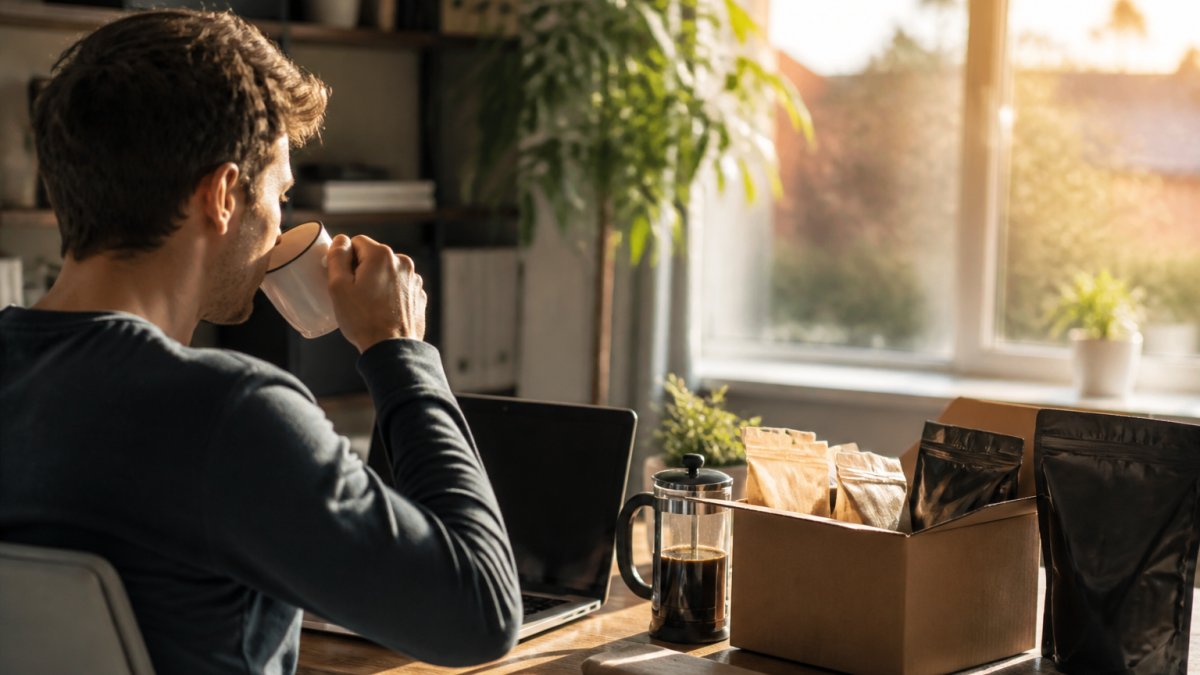
The most immediate benefit is automation. Your coffee arrives on your schedule without you lifting a finger after the initial setup. No more realizing at 6 a.m. that you're out of beans.
This matters more than it sounds. Many coffee drinkers describe the low-level stress of managing supply: checking inventory, remembering to order, waiting for delivery, then scrambling if something ships late. Subscription coffee eliminates that loop entirely. You set it and forget it.
The "never run out" benefit extends to work settings too. Remote workers and office managers appreciate knowing that coffee will be there when they need it. For teams, this removes a small but recurring administrative task.
Freshness and Roast-to-Door Timing
Freshly roasted coffee peaks in flavor within days of roasting. Most coffee subscriptions roast to order or roast in small batches, then ship immediately. This means your coffee arrives fresher than anything sitting on a retail shelf for weeks.
The difference is tangible. A bag roasted five days ago tastes noticeably brighter and more complex than one roasted three weeks ago. Subscription services control this timing in a way retail stores cannot. You get coffee at its best, not at whatever stage it reaches after distribution delays.
Fairwood Coffee ships our artisan blends with roast dates clearly marked. You know exactly when your beans were roasted and can plan your brewing schedule accordingly. This transparency matters to coffee enthusiasts who understand that freshness directly affects flavor.
Coffee Selection and Discovery
Subscriptions open access to coffee variety that most people never encounter at retail. Instead of choosing from five options at a grocery store, you can sample single-origin coffees from Brazil, Colombia, Ethiopia, and Tanzania. You can try flavored blends, cold brew-specific roasts, or signature house blends.
Many subscription services include discovery as a core feature. Each month might bring a new roast or origin you haven't tried. This transforms coffee from a commodity into an exploration. Over a year, you'll taste coffees you'd never encounter otherwise.
Our Best Sellers Sample Pack and Single Origin Favorites Sample Pack let customers try six different coffees in small quantities. This discovery approach costs less than buying full bags of each option while giving you real data about your preferences before committing to larger quantities.

Coffee Subscription Pros and Cons
Subscription coffee services excel at convenience and freshness, but they're not perfect for everyone. Understanding the tradeoffs helps you decide if the model fits your situation.
Pros:
- Automatic delivery eliminates shopping and inventory management
- Freshness guaranteed through roast-to-order or rapid shipping
- Access to specialty and single-origin coffees unavailable at retail
- Customizable grind sizes and delivery schedules
- Flexibility to pause, skip, or adjust orders without penalty
- Consistent quality across shipments
Cons:
- Upfront commitment required even with flexibility to adjust
- Shipping costs add to the per-cup price in some cases
- Storage space needed for regular deliveries
- Less spontaneous than buying what appeals to you in the moment
- Quality consistency depends on the roaster's standards
- Cancellation processes vary by service and can be unclear
- Risk of receiving coffee that doesn't match your taste preferences
The cons are real but manageable. Storage is a legitimate concern if your kitchen space is tight. Shipping costs matter if you're comparing a subscription to buying locally. The taste-preference risk is why sample packs exist: they let you validate your choices before committing to full-size bags.
Coffee Subscription Customization Options
Most subscription services offer meaningful customization, though the depth varies. Here's what you typically control:
Grind size matters for your brewing method. Espresso requires a fine, consistent grind. French press needs coarse grounds. Drip machines work best with medium grinds. Good subscription services let you specify this for each delivery, or adjust it monthly.
12 Pack Single Serve Coffee Capsules →
Roast profile is another key choice. Light roasts preserve origin characteristics and acidity. Medium roasts balance flavor and body. Dark roasts emphasize boldness and reduce acidity. Some services rotate roasts automatically; others let you lock in your preference.
Delivery frequency ranges from weekly to monthly to quarterly. A single person might choose monthly. An office might order weekly. The flexibility to adjust this without penalty keeps the service practical as your consumption changes.
Bag size varies too. Some services offer 8-ounce samples, 12-ounce bags, or bulk 2-pound quantities. Fairwood Coffee's capsule options range from 12-pack to 60-pack quantities, letting you match your usage pattern.
Subscription pausing deserves emphasis. Life happens. You travel, experiment with other brands, or simply have leftover coffee. The ability to skip a month without losing your subscription or facing penalties removes a major friction point.
Are Coffee Subscriptions Worth It: Cost Comparison and Value
The value question matters because subscriptions often cost more per ounce than bulk retail coffee but less than specialty cafes. The real comparison depends on your current spending pattern, your household's consumption, and whether shipping is included. A transparent, worked comparison is the only way to judge whether the benefit is real for you.

Start with consumption. A typical 12-ounce bag of coffee yields roughly 24-30 cups at 12-15 grams per cup, depending on brew method. A single daily coffee drinker using about 15 grams per cup consumes roughly 450 grams per month, or about 1.3 bags of 12-ounce coffee.
Here is a worked comparison using representative price ranges rather than a single brand's quote. The point is the method, not the exact figures.
| Purchasing Method | Typical Cost per 12 oz | Shipping | Effective Monthly Cost (1.3 bags) | Freshness at Brew | Convenience |
|---|---|---|---|---|---|
| Grocery store coffee | $6-$10 | $0 (in-store) | $8-$13 | 2-4 weeks old | High |
| Specialty retail | $14-$22 | $0 (in-store) | $18-$29 | 1-2 weeks old | Medium |
| Coffee subscription (shipping included) | $16-$24 | Included | $21-$31 | 3-7 days old | Very high |
| Coffee subscription (shipping added) | $16-$24 | $5-$8 per order | $26-$39 | 3-7 days old | Very high |
| Daily cafe purchases | $2.50-$4.00 per cup | N/A | $75-$120 | Fresh | Low |
The table shows the two variables that decide the value question: whether shipping is included and whether your bag size matches your consumption. A subscription that includes shipping and ships the right quantity can land within a few dollars per month of specialty retail while delivering fresher coffee.
Subscription discounts are the other lever. Many roasters offer a lower per-bag price for subscribers than for one-time buyers, and some waive shipping above a minimum order value. These discounts are usually modest, often in the 5-15% range, but they change the math when combined with included shipping.
The comparison also depends on what you are replacing. For someone buying coffee at cafes several times a week, a subscription saves money while improving quality and convenience. For someone buying bulk grocery store coffee, the subscription costs more but delivers noticeably fresher, more interesting coffee.
Reducing Waste and Managing Storage
One often-overlooked benefit of subscriptions is waste reduction, but the benefit only materializes when delivery frequency and quantity are planned around actual household consumption. Smaller, frequent deliveries mean less coffee sitting around losing freshness. You brew what you have, receive more when you need it, and rarely throw out stale coffee.
Start with a two-week consumption estimate. Count the cups your household brews on a typical weekday and weekend, multiply by the grams per cup for your brew method, and convert to bags. A single daily drinker using about 15 grams per cup needs roughly 450 grams per month, or about 1.3 bags of 12-ounce coffee.
The practical rule is to match delivery interval to consumption so that coffee arrives no more than about two to three weeks before you finish the previous bag.
Storage planning follows from the same math. Most coffee subscriptions deliver monthly quantities that fit easily in a standard kitchen cabinet or pantry. If space is tight, adjust your delivery frequency to bi-monthly or quarterly and store the extra bags in a cool, dark cabinet away from direct sunlight. Avoid the refrigerator, because condensation damages coffee flavor.
The environmental angle matters too. Regular, efficient delivery beats multiple car trips to stores, and subscription packaging is typically designed for protection without excess. If packaging waste is a concern, ask the roaster how bags and shipping materials are handled and whether the subscription supports whole-bean delivery.
Frequently Asked Questions
How do coffee subscriptions work?
A coffee subscription delivers freshly roasted coffee directly to your door on a recurring schedule you control. You choose your delivery frequency (weekly, bi-weekly, or monthly), select from available blends or single-origin coffees, and specify your grind preference. Your order ships automatically unless you pause or skip it. Each shipment contains coffee roasted shortly before dispatch, ensuring maximum freshness. You can adjust your preferences, change delivery dates, or cancel anytime without penalties.
Are coffee subscriptions worth it compared to buying coffee in stores?
The value depends on your consumption and priorities. Subscription coffee arrives fresh within days of roasting, whereas retail bags may sit on shelves for weeks. If you drink premium coffee daily, subscriptions eliminate trips to shops and guarantee consistent quality. The trade-off is upfront commitment and storage space. For occasional drinkers or those satisfied with mass-market retail options, subscriptions may not justify the premium. Start with sample packs to test whether the taste and convenience align with your budget.
What makes coffee subscription customization important?
Customization lets you match your subscription to your actual preferences and lifestyle. You control grind size (whole bean, espresso-fine, or filter grind), delivery frequency based on consumption, bag size, and coffee selection. This flexibility prevents waste from unwanted coffee sitting unused and ensures you receive what you'll actually drink. You can pause during vacations, skip months, or switch between blends without cancelling. Poor customization options lead to subscription fatigue and cancellation, so choose services that let you adjust without friction.
Do coffee subscriptions deliver fresh coffee?
Yes, freshness is a key advantage of subscriptions. Fairwood Coffee and similar services roast coffee in small batches and ship within days, whereas retail bags may have been roasted weeks or months earlier. Each capsule or bag is sealed to preserve freshness, Fairwood's single-serve capsules use oxygen-free sealing to maintain quality. Freshly roasted coffee tastes noticeably better: brighter acidity, clearer flavour notes, and richer crema. If you prioritise taste over convenience, subscription delivery timing matters significantly compared to buying pre-roasted stock.