

French Press vs AeroPress for Beginners: 2026 Guide
Table of Contents
- French Press vs AeroPress: Quick Comparison for Beginners
- French Press Grind Size Guide: What Beginners Need to Know
- AeroPress Brewing Techniques for Beginners
- How to Clean AeroPress vs French Press
- Flavor Profile and Mouthfeel: French Press vs AeroPress
- Portability, Capacity, and Daily Use for Busy Beginners
- Which Manual Brewer Should a Beginner Choose?
- Frequently Asked Questions
Last Updated: September 24, 2026
French Press vs AeroPress: Quick Comparison for Beginners
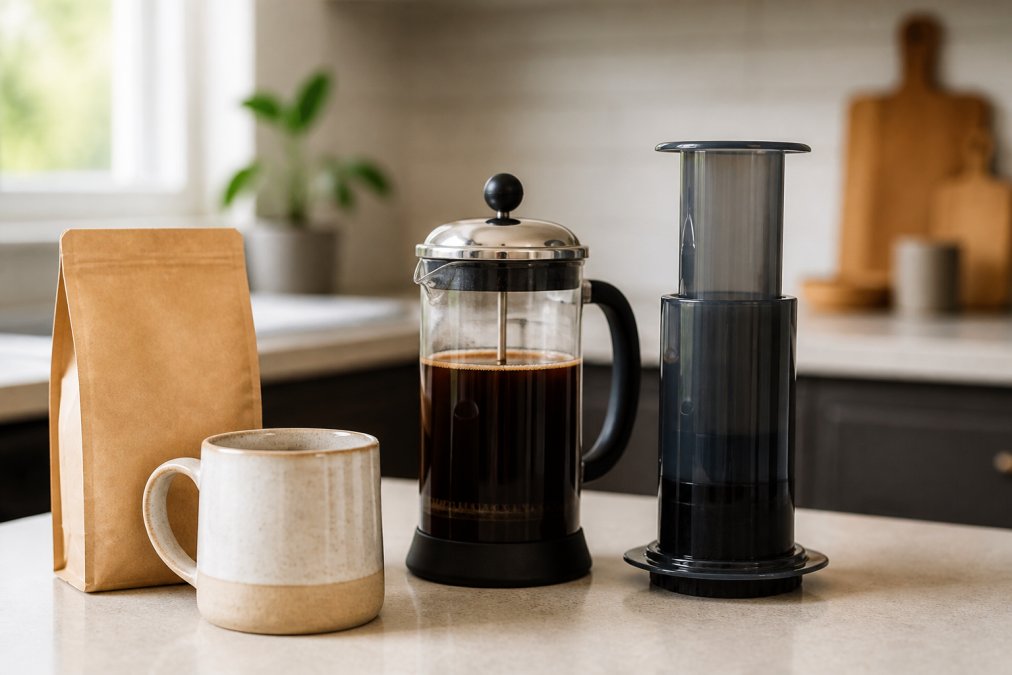
Choosing between a French press and an AeroPress comes down to one question: do you want a full-bodied, forgiving brew or a fast, clean, single-serve cup? For beginners comparing the french press vs aeropress, the French press wins on simplicity and batch size, while the AeroPress wins on speed, portability, and cleanup. This guide breaks down grind size, brewing technique, and flavor so you can pick the right one the first time.
The French press is a manual coffee maker that steeps coarse coffee grounds in hot water and separates them with a metal mesh filter. The AeroPress is a compact pressure-based brewer that pushes water through a paper filter in about 90 seconds. Two devices, two completely different extraction methods.
Here's the part most guides skip: your grind size and water temperature matter more than which device you buy. Get those wrong and even the best brewer tastes flat.
| Factor | French Press | AeroPress |
|---|---|---|
| Brew time | 4-5 minutes | 1.5-2 minutes |
| Filter type | Metal mesh | Paper (or metal) |
| Cup style | Full-bodied, rich | Clean, bright |
| Best for | Batch brewing | Single-serve |
| Cleanup | Rinse and scrape | Pop and rinse |
| Portability | Bulky, fragile | Compact, durable |
French Press Grind Size Guide: What Beginners Need to Know
French press coffee requires a coarse grind, roughly the texture of sea salt. Too fine and the grounds slip through the metal mesh filter, leaving sediment in your cup and a bitter, over-extracted taste.
Grind consistency matters more than grind setting. A burr grinder produces even particles; a blade grinder creates a mix of powder and boulders that brews unevenly. If you're buying pre-ground coffee, look for a bag labeled for French press or coarse grind.
A simple starting recipe:
- 30 grams coarse coffee
- 500 ml water at 93-96°C
- Steep 4 minutes, then press slowly
Specialty Coffee Association brewing standards recommends a coffee-to-water ratio between 1:15 and 1:18 for immersion brewing. Start at 1:16 and adjust to taste.
AeroPress Brewing Techniques for Beginners
The standard AeroPress method is simple: add a paper filter, scoop in fine-medium grounds, pour hot water, stir, and press. Total time is under two minutes. But the difference between a mediocre cup and a great one comes down to three variables you can control: grind, water temperature, and steep time.
The standard (upright) method
- Place a paper filter in the cap and rinse it with hot water to remove papery taste.
- Add 15-18 grams of medium-fine coffee (like table salt).
- Pour 200-250 ml water at 85-92°C.
- Stir 10 seconds, then steep 1 to 1.5 minutes.
- Press slowly over 20-30 seconds until you hear a hiss.
The inverted method gives you more control. You assemble the brewer upside down, add coffee and water, let it steep, then flip and press. This prevents early dripping and produces a more consistent cup. It's the preferred method for beginners who want repeatability.
AeroPress brewing techniques for beginners come down to three variables:
- Grind: medium-fine, like table salt. Too coarse and the water rushes through; too fine and you'll struggle to press.
- Water temperature: 80-96°C depending on roast. Lighter roasts need hotter water; darker roasts do better cooler.
- Steep time: 1 to 2 minutes. Longer steeps increase body but can add bitterness.
Lower water temperature reduces bitterness. If your cup tastes harsh, drop the temperature before you change anything else. If it tastes sour or weak, increase temperature or steep longer.
Recipe scalability for beginners The AeroPress shines for single servings, but you can scale it. For a stronger cup, use 20g coffee and 200ml water, then dilute with hot water to taste (bypass brewing). For two people, brew two concentrated shots back-to-back, it takes about 4 minutes total, still faster than a French press batch.
How to Clean AeroPress vs French Press
Cleaning is where the AeroPress pulls ahead. The paper filter and coffee puck pop out in one piece, and a quick rinse finishes the job. The whole process takes under 30 seconds.
The French press takes more work. You scrape out wet grounds, disassemble the plunger, and rinse the mesh filter to stop oils and micro-fines from building up. Skip this and old coffee residue turns every future cup stale.
For how to clean an AeroPress vs French press, the routine differs:
- AeroPress: remove filter cap, push out the puck, rinse the plunger and chamber
- French press: dump grounds, separate the filter and rod, rinse all parts, air dry
Deep-clean the French press mesh weekly with warm water and a soft brush. Never use soap on either brewer's filter parts; the residue lingers and ruins flavor.
Flavor Profile and Mouthfeel: French Press vs AeroPress
Flavor is the biggest divider between these two brewers. The French press's metal mesh filter lets oils and micro-fines pass into the cup, producing a full-bodied, heavy mouthfeel with lower clarity.
The AeroPress's paper filtration traps those oils, giving you a clean cup with brighter acidity and sharper flavor separation. You taste the roast's character more precisely.
Which is better? Neither. It depends on what you want:
| You prefer | Choose |
|---|---|
| Rich, textured, heavy body | French press |
| Clean, bright, tea-like clarity | AeroPress |
| Less sediment | AeroPress |
| Oils and mouthfeel | French press |
Portability, Capacity, and Daily Use for Busy Beginners
For a busy professional, the AeroPress is the more travel-friendly option. It's compact (about 12 cm tall, 10 cm wide), made from durable BPA-free plastic, and packs into a bag without risk. The French press is bulky, often glass, and awkward to transport, a standard 1-liter model weighs around 1.5 kg and takes up significant counter space.
Capacity flips the advantage. A French press brews 3 to 4 cups in one batch (750-1000 ml), ideal for sharing or a slow morning. The AeroPress makes one concentrated cup at a time (200-250 ml), so serving guests means repeating the process. If you regularly brew for two or more, the French press saves time.
Daily use comes down to your routine. If you're a remote worker making a single cup between meetings, the AeroPress fits. If you brew for two and value a relaxed ritual, the French press delivers.
Grind size compatibility: the hidden variable Most guides skip this, but your grinder setting affects each device differently. The French press needs a coarse grind (sea salt texture) to prevent sediment. The AeroPress needs medium-fine (table salt texture) for proper extraction. If you own one grinder, you'll need to adjust settings between devices, a major pain point for beginners. A burr grinder with stepless adjustment makes this easier; a blade grinder makes it nearly impossible to switch consistently.
Water temperature variables Beginners often struggle with temperature.
Which Manual Brewer Should a Beginner Choose?
The best manual brewer for a beginner depends on your priorities, not on which device is "better." Both reward good technique and punish shortcuts.
Choose the French press if you:
- Brew for two or more people
- Love a full-bodied, rich cup
- Want the simplest possible process
- Don't mind a few minutes of steeping
Choose the AeroPress if you:
- Drink one cup at a time
- Want speed and easy cleanup
- Travel or have limited counter space
- Prefer a clean, bright flavor
Frequently Asked Questions
Does AeroPress make better coffee than French press?
Neither is objectively better; they produce different styles. AeroPress uses pressure-based extraction and a paper filter, yielding a clean cup with low sediment and bright acidity. French press uses immersion brewing with a metal mesh filter, giving a full-bodied cup with more oils and sediment. Your preference for clarity versus richness should guide your choice.
Is the AeroPress easier to use for a beginner than a French press?
The French press is simpler to start with: add coarse grounds, pour hot water, wait four minutes, and press the plunger. The AeroPress has more variables like grind size, water temperature, and pressing technique, but its forgiving nature lets you adjust without ruining the cup. Beginners who want minimal fuss often prefer the French press, while those willing to experiment enjoy the AeroPress.
What are the downsides of using a French press?
French press coffee contains sediment from the metal mesh filter, which can feel gritty. It also requires a coarse, consistent grind; too fine and the plunger becomes hard to press and the cup turns bitter. Cleanup takes longer because you must disassemble the plunger and rinse all parts. Finally, it is not travel-friendly due to its glass body and bulky size.
Which coffee maker produces a cleaner cup: French press or AeroPress?
AeroPress produces a noticeably cleaner cup because its paper filtration traps micro-fines and oils that a French press metal mesh filter lets through. If you dislike sediment and prefer clarity, the AeroPress is the better choice. French press fans argue that the sediment adds mouthfeel and complexity, so it comes down to personal taste.
Picking a brewer is the easy part. Keeping it stocked with coffee that actually matches your taste is where most beginners stall. Fairwood Coffee delivers artisan coffee blends straight to your door with fast, automated fulfillment, so you spend your mornings brewing instead of reordering. There's no inventory to manage and no guessing about what arrives next. Get started with Fairwood Coffee and keep your French press or AeroPress supplied with coffee worth the ritual.