

Coffee Sample Packs: How to Choose the Best One
Last Updated: November 22, 2026
Quick Summary
To choose the best coffee sample pack, set your brewing method first, then pick a roast spread from light to dark rather than a favorite, and compare price per cup instead of sticker price. Always check the roast date, since a two-ounce sample yields roughly four to six cups.
- A two-ounce sample yields roughly four to six cups depending on dose and brew method.
- Six 2 oz samples at 16 g per cup produce about 21 cups total.
- Our sample packs are priced at $24.99 for six 2 oz samples.
- Match grind to your brewer: medium-fine for pour-over, coarse for French press, fine for espresso.
- Finish each 2 oz sample within a week of opening and store it airtight away from light and heat.
Table of Contents
- What a Coffee Sample Pack Actually Contains
- A Step-by-Step Framework for Choosing a Coffee Sample Pack
- Coffee Sampler Packs by Roast and Grind
- Why a Coffee Bean Sampler Pack Beats a Single Bag
- Picking the Best Coffee Sampler Gift
- Are Coffee Sample Packs Free, and What Do You Really Pay?
- Freshness, Storage, and a Repeatable Tasting Method
- Ordering Your First Fairwood Sample Pack
- Frequently Asked Questions
What a Coffee Sample Pack Actually Contains
A coffee sample pack is a curated set of small-format coffee bags, usually two ounces each, designed to let you taste several coffees before committing to a full-size bag. This guide walks through how to choose the best coffee sample pack, from counting cups per bag to matching grind size to your brewer.
Here is the number that matters most: a two-ounce sample yields roughly four to six cups depending on your dose and brew method. That is enough to form a real opinion, not just a first impression.
Most sample packs fall into one of three structures:
- Blend-led packs mix house blends with a few single origins, good for everyday drinkers
- Single origin packs stay on one continent or spread across several, built for comparison
- Flavored packs group dessert-style profiles like vanilla, caramel, and hazelnut
What most guides miss is that the format matters more than the coffee count. Six samples of the same roast level teach you very little. Six samples spanning light to dark teach you where your palate actually sits.
A Step-by-Step Framework for Choosing a Coffee Sample Pack
Choosing well comes down to five decisions, made in this order. Skip one and you end up with a pantry of coffee you never finish.
- Set your brewing method first. Pour-over, espresso, drip, and French press all want different grind sizes. Match the sample format to your equipment before anything else.
- Pick a roast spread, not a roast favorite. Order light through dark so you learn your preference rather than confirming it.
- Count your cups. Divide total ounces by your dose to see how many brews you get. Six 2 oz samples at 16 g per cup is roughly 21 cups.
- Compare price per cup, not sticker price. A $24.99 pack of six 2 oz samples works out to a low cost per cup. A single 12 oz bag at the same price may cost more per brew.
- Check the roast date. Freshness beats variety every time. A pack roasted last week outperforms a wider selection roasted three months ago.
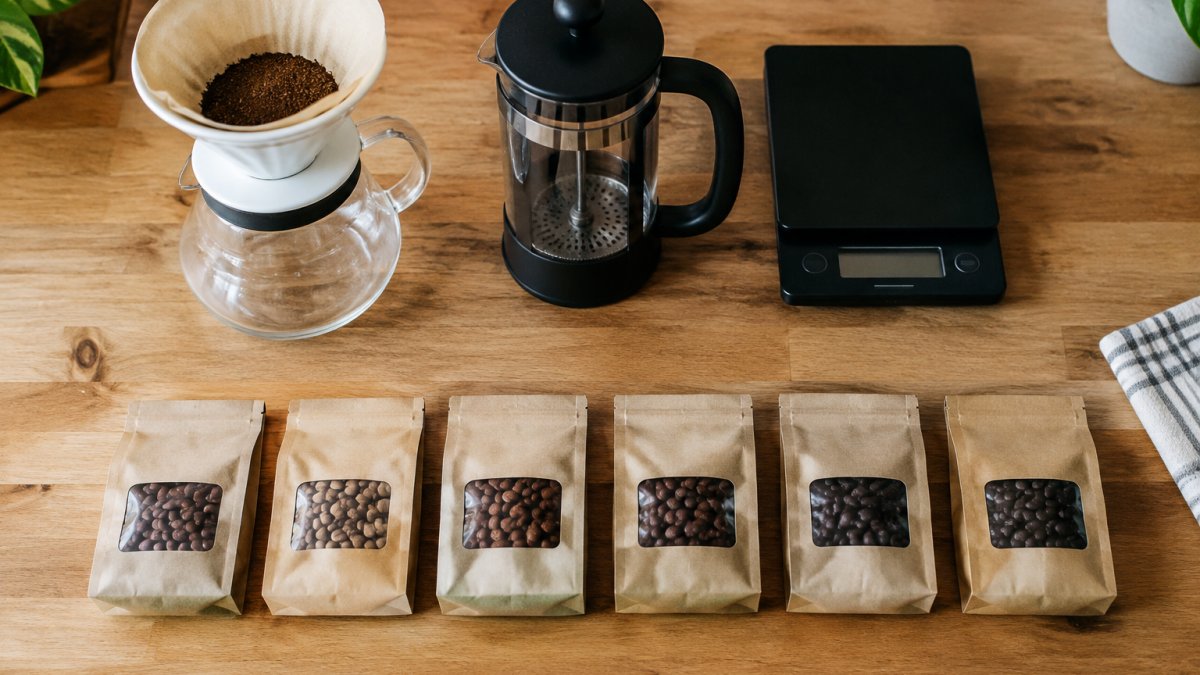
Match Sample Size to Your Brewing Habits
Two ounces is the standard sample size, and it is a sensible one. It gives you enough coffee to dial in a recipe and adjust, which a single-cup sample cannot do.
Espresso drinkers should look for dark and medium-dark samples, since light roasts demand finer grinding and more dialing in. Drip and French press drinkers have the widest range.
Whole bean versus ground coffee is the next fork. Whole bean keeps its aroma longer and lets you grind to your brewer.
Calculate Cost Per Cup Before You Commit
The sticker price tells you almost nothing. Cost per cup does.
Take the pack price and divide by the number of cups it produces. A six-pack of 2 oz samples totals 12 ounces. At 16 g per cup, that is about 21 cups.
Watch out: sample packs priced low per ounce but shipped with old roast dates are not value. You are paying for coffee that has already peaked. Check the roast date before you check the discount.
| Decision | What to Check | Why It Matters |
|---|---|---|
| Brew method | Grind size and format | Wrong grind wastes the sample |
| Roast spread | Light through dark range | Teaches your real preference |
| Cups per bag | Ounces ÷ dose | Reveals true value |
| Price per cup | Pack price ÷ cups | Beats sticker-price comparison |
| Roast date | Within two weeks of roast | Freshness drives flavor |
Coffee Sampler Packs by Roast and Grind
Roast level is the single biggest lever on flavor, so build your sampler around it. Light roasts keep more origin character, with brighter acidity and clearer aroma.
Grind is the second lever, and it is where most sampler advice stops short. The right grind is not a preference, it is a function of your brewer and your sample format. Match them before you order:
- Pour-over (V60, Chemex, Kalita): medium-fine, closer to table salt. Light and medium-light roasts show their acidity and aroma most clearly here. Whole bean is strongly preferred so you can dial in.
- Drip machine: medium, like coarse sand. Medium roasts are the safest spread; light roasts can taste thin and dark roasts can turn bitter in a standard basket.
- French press: coarse, like sea salt. Medium and medium-dark roasts hold up to the longer steep and fuller body.
- Espresso: fine, tuned per bag. Dark and medium-dark samples are more forgiving; light roasts demand finer grinding and more dialing in, which a 2 oz sample barely allows.
- Moka pot: fine-medium. Medium and medium-dark roasts work best; light roasts can taste sharp.
Whole bean versus ground is the next fork. Whole bean keeps its aroma longer and lets you grind to your brewer.
Watch out: a sampler sold only as "ground" with no grind choice will brew poorly in at least half of the brewers it reaches.
Our single origin favorites sample pack covers a range of origins, including Brazil Santos with cocoa notes, Ethiopia with milk chocolate and caramel, and Honduras with caramel, spice, and brown sugar. If you prefer flavored profiles, our flavored coffees sample pack offers medium-roast flavored coffees. For a deeper look at how roast choice shapes your brew, our coffee roast profile guide breaks down light, medium, and dark by flavor and method.
Why a Coffee Bean Sampler Pack Beats a Single Bag
A coffee bean sampler pack removes the biggest risk in buying coffee: committing twelve ounces to a flavor you have never tasted.
The math is straightforward. Six 2 oz samples give you six separate coffees and roughly 21 cups.
There is a second benefit most people overlook. For more on how sampling changes your everyday brewing, see our guide to coffee sample packs for better everyday brews.
The trade-off is real, though. Sampler packs cost more per ounce than bulk bags.
Picking the Best Coffee Sampler Gift
The best coffee sampler gift matches the recipient's brewing setup and experience level, not your own taste. A pour-over devotee and an espresso drinker need different roasts and different grinds, and a beginner needs a different pack than someone who already owns a scale and a gooseneck kettle.
Work through four decisions in order:
- What do they brew with? Espresso points to dark and medium-dark samples ground fine; drip and pour-over suit medium and light samples at medium or medium-fine; French press wants coarse-ground medium and medium-dark. If you do not know, choose whole bean and a roast spread, the recipient can grind to suit.
- Do they own a grinder? If yes, gift whole bean. If no, order ground to match their brewer, and confirm the pack lets you specify grind at checkout.
- How experienced are they? Beginners do best with a blend-led or flavored pack at a consistent medium roast, where the cups are forgiving. Experienced drinkers do best with a single origin pack that spans origins and roast levels, where the differences are the point.
- Sweet or savory palate? Flavored packs suit dessert-leaning drinkers; single origin packs suit the curious. A mixed pack that spans roast levels is the safest gift when you are unsure, because it lets the recipient discover their own favorite rather than confirming yours.
Pair the pack with a simple tasting card, aroma, acidity, body, and a one-to-five score, so the gift becomes an activity rather than a bag of beans. If the recipient drinks decaf, check whether the roaster offers a decaf sample option before defaulting to a caffeinated pack; a sampler they cannot drink at night is a sampler that sits in the cupboard.
Watch out: gifting a sampler with no roast date on the bag is the most common way this gift goes wrong. A wide selection roasted months ago reads as generous but tastes flat, and the recipient has no way to know why.
Are Coffee Sample Packs Free, and What Do You Really Pay?
Free coffee sample packs exist, but they usually come with conditions: a subscription signup, a shipping charge, or a single small sample rather than a full set.
Paid samplers are where the real value sits. Our sample packs are priced at $24.99 for six 2 oz samples.
The hidden cost to watch is shipping and subscription lock-in. A cheap sampler that requires a recurring plan is not cheap.
Freshness, Storage, and a Repeatable Tasting Method
Freshness decides whether your sampler was worth buying. Coffee peaks in the days after roasting and fades steadily after that. Look for a roast date on the bag, not just a best-by date.
Store samples in an airtight container away from light and heat. Keep the bags sealed until you open them, and finish each 2 oz sample within a week of opening.
For tasting, use a repeatable method so your notes mean something:
- Brew every sample the same way, same dose, same water temperature
- Taste black first, then add milk if that is how you drink it
- Note three things only: aroma, acidity, and body
- Score each from one to five and compare after all six
Ordering Your First Fairwood Sample Pack
Start with one pack, taste all six, and let your notes decide the next order. That is the whole method, and it beats guessing every time.
Our best sellers coffee sample pack is a natural first step: six 2 oz samples covering 6 Bean, Cowboy, Breakfast, Peru, Mexico, and Bali, from a smooth medium-roast Breakfast blend through dark, espresso-suited 6 Bean blend.
From there, move to single origins or flavored profiles depending on what your notes revealed. Packs ship straight to your door with fast, automated fulfillment.
The hardest part of buying coffee is not finding good beans. It is knowing which good beans you actually want to drink every morning.
Frequently Asked Questions
What should I look for in a coffee sample pack?
Check four things: sample size, roast range, grind format, and roast date. Look for a pack that spans light to dark roasts so you can compare, and confirm whether the samples are whole bean or ground. Flavor notes are clues rather than guarantees, so treat them as a starting point and let your own tasting decide.
Should I choose whole-bean or pre-ground coffee samples?
Whole bean keeps its aroma and oils longer, so it suits anyone with a grinder and gives you control over grind size for pour-over, espresso, or French press. Pre-ground is simpler if you brew drip coffee and do not own a grinder. Match the grind to your brewing method: coarse for French press, medium for drip, fine for espresso. If you are unsure, whole bean plus a cheap burr grinder is the more flexible choice.
Are coffee sample packs free, and how much do they usually cost?
Genuinely free sample packs are rare and usually tied to a subscription sign-up or a shipping charge. Most quality sampler packs are paid one-time purchases. Fairwood Coffee sells its sample packs at 24.99 for six 2 oz bags, which works out to roughly 12 oz of coffee. That is enough to compare six coffees cup by cup before committing to a full-size bag of the one you like best.
How many coffees should a sampler pack include?
Six is a practical number. Fewer than four limits your comparison, while more than eight makes it hard to taste each one before the coffee stales. Six 2 oz samples give you a spread of roasts and origins without overwhelming your cupboard. Taste them side by side over a week or two, note which ones you would rebuy, then order a full bag of the winner.
