

What Makes High Quality Coffee Blends: A 2026 Guide
Last Updated: October 23, 2026
Quick Summary
High quality coffee blends combine beans from multiple origins, each selected for specific flavor characteristics that work together to create balance, consistency, and complexity in the cup. The difference comes down to intentional bean selection, roast precision, and understanding how origins interact.
- High-altitude farms above 1,200 meters produce denser beans with higher sugar content that roast better.
- The ideal brewing window for fresh coffee is 5-30 days after the roast date printed on the bag.
- Espresso blends need medium to dark roast with good body and lower acidity to cut through milk.
- Filter coffee blends can use lighter roasts because extended contact time extracts subtle flavors without heavy body.
- Store beans in an airtight container at room temperature in a dark place, never in the freezer.
Table of Contents
- What Makes High Quality Coffee Blends
- Coffee Blend vs Single Origin: Understanding the Difference
- Coffee Bean Quality Factors That Define Excellence
- Best Coffee Blends for Brewing Methods
- How to Store Coffee Beans and Preserve Quality
- Tasting and Evaluating Coffee Blend Quality
- Transparent Sourcing and Ethical Blend Composition
- Frequently Asked Questions
What Makes High Quality Coffee Blends
High quality coffee blends combine beans from multiple origins, each selected for specific flavor characteristics that work together to create balance, consistency, and complexity in the cup. According to the 2026 National Coffee Data Trends report, 66% of Americans had coffee in the past day, yet most don't understand what separates an exceptional blend from a mediocre one.
The best blends aren't accidents, they're engineered. A roaster chooses beans from different regions, each contributing a distinct role: one origin provides acidity and brightness, another adds body and sweetness, a third brings complexity. Balanced correctly, the result is greater than the sum of its parts.
The role of origin and variety in blend composition
Each origin brings its own flavor signature shaped by altitude, soil, rainfall, shade, and microclimate.
Roasters select specific origins and varieties to hit target flavor notes: an Ethiopian Yirgacheffe contributes bright citrus and floral complexity, a Colombian bean adds sweetness and chocolate body, and a Brazilian natural-processed coffee brings richness and lower acidity.
Fairwood Coffee's House Blend, for example, combines select coffees from Central and South America, both natural/dry processed and wet mill washed, grown in environmentally conscious conditions at high elevation.

How roast level shapes flavor and consistency
Roast level is one of the most visible quality indicators, yet it's often misunderstood.
The problem isn't which roast is "best", consistency matters more than preference. A quality roaster hits the same roast level every batch; a mediocre one varies wildly, giving you inconsistent flavor from bag to bag.
Fairwood Coffee's African Espresso uses a medium/dark roast designed for its brewing method, while the Latin American Blend's medium-dark roast brings out nutty hints and mild fruity tones while maintaining the environmental integrity of shade-grown, rain-forest-protected beans.
Coffee Blend vs Single Origin: Understanding the Difference
Single-origin coffees highlight the unique characteristics of one farm, region, or country. They're prized for their individuality, you taste exactly what that terroir produced.
Blends combine beans from multiple origins to create a balanced, consistent cup, smoothing out the extremes of any single origin while layering complexity.
Research from the Specialty Coffee Association's 2026 data shows that specialty coffee consumption among American adults rose from 53% in 2022 to 58% in 2026, and much of that growth comes from people discovering blends that fit their taste preferences and brewing methods.
The real distinction: single-origins showcase origin, blends showcase the roaster's skill. Want a specific region's coffee? Buy single-origin. Want consistency, balance, and a cup that works across brewing methods? A quality blend is your answer.
Coffee Bean Quality Factors That Define Excellence
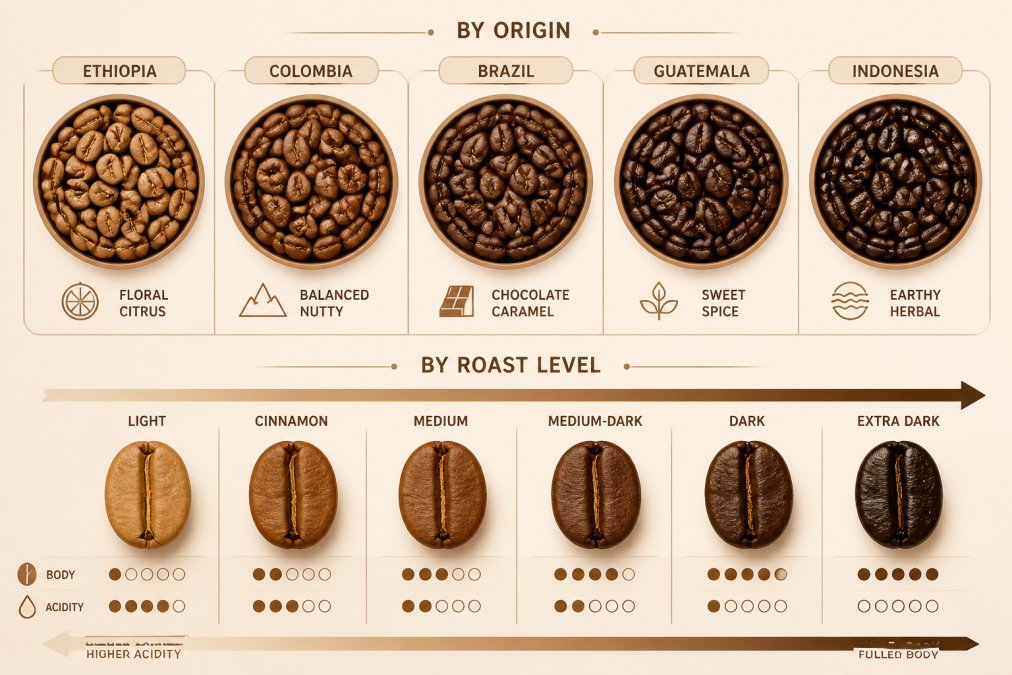
Bean quality starts in the field, with farmers' decisions about altitude, shade, processing, and harvest timing. A quality bean has high sugar content, consistent moisture, and proper density, factors that affect how it roasts and tastes.
Sourcing, processing, and environmental conditions
High-altitude farms (above 1,200 meters) produce denser beans with higher sugar content because the plant grows more slowly in cooler conditions.
Processing method shapes flavor as much as origin: wet mill washed processing produces cleaner, brighter cups, while natural/dry processing creates fruitier, fuller-bodied coffees. The choice isn't which is "better" but which profile the roaster wants.
Our Latin American Blend uses shade-grown beans from volcanic soil near the Amazon rain forest, processed with environmentally friendly methods.
Evaluating freshness and roast date
Freshness is non-negotiable. Coffee degrades immediately after roasting as it loses volatile aromatic compounds. A quality roaster prints the roast date on every bag, if you don't see one, don't buy it.
The ideal brewing window is 5-30 days after roast.
Best Coffee Blends for Brewing Methods
Different brewing methods extract coffee differently, and the best blend for espresso isn't necessarily the best for filter coffee.
Espresso and milk-based drinks
Espresso demands a blend with enough body and sweetness to cut through milk without disappearing. Its high pressure and fast extraction pull out different compounds than filter brewing, so an espresso blend typically uses medium to dark roast, good body, lower acidity, and enough complexity to shine even when diluted with milk.
Fairwood Coffee's 6 Bean Blend is a dark roast house blend engineered for espresso. Its combination of beans from around the world creates a meticulous balance that works as a shot, in a cappuccino, or as an Americano, the dark roast brings the body and richness espresso lovers expect, while the blend composition keeps it from becoming one-dimensional.

The African Espresso, a medium/dark roast blend of coffees from Kenya, Tanzania, and Ethiopia, is another option designed with espresso in mind. The African origins bring brightness and complexity that cuts through milk while maintaining the body espresso requires.
Filter coffee and pour-over
Filter brewing is gentler and slower, extracting more subtle flavors.
Fairwood Coffee's House Blend, a medium roast of select Central and South American coffees, works beautifully for filter coffee. The medium roast preserves origin characteristics while the blend composition ensures consistency.
The Breakfast Blend, also medium roast, is a smooth blend of South American coffees that works well for pour-over and drip brewing. The name signals its intended use: a reliable, consistent, approachable cup for morning brewing without complexity that demands attention.
How to Store Coffee Beans and Preserve Quality
Once a bag is open, oxygen, light, moisture, and heat become your enemies, coffee begins to stale the moment air hits it.
Store beans in an airtight container in a cool, dark place. Avoid the freezer, condensation as beans warm up causes degradation. Room temperature in a dark cabinet is ideal.
Fairwood Coffee's subscription delivers fresh beans on a schedule matching your consumption, so you never have stale coffee sitting around.

Tasting and Evaluating Coffee Blend Quality
You don't need to be a professional cupper, just know what to pay attention to.
Sensory assessment: aroma, body, acidity, and finish
Aroma is the first indicator. Open a fresh bag and smell the beans, quality coffee has a clean, complex aroma, not musty or flat.
Acidity isn't about pH, it's brightness and liveliness. High acidity feels crisp and vibrant; low acidity feels smooth and muted.
Finish is what lingers after you swallow. A quality finish is clean and pleasant, lasting 30 seconds or more.
Building repeatable evaluation habits
Brew the same coffee the same way multiple times, fresh water at the right temperature, the same grind size, the same coffee-to-water ratio, and note what changes and what stays the same.
After a few brews you'll notice patterns: the tasting notes the roaster listed, the body and acidity, the finish.
The Specialty Coffee Association's tasting standards provide a framework for this kind of evaluation.
Transparent Sourcing and Ethical Blend Composition
Quality blends require transparency: you should know where the beans come from and how they were processed. This isn't just ethics, it's a quality indicator, because roasters who care about sourcing produce better coffee.
The difference between a forgettable cup and one you actually look forward to comes down to intentional choices at every step: bean selection, roast precision, blend composition, freshness, storage, and brewing. At Fairwood Coffee, we've built our entire model around these choices.
| Blend | Roast Level | Best For | Flavor Profile |
|---|---|---|---|
| House Blend | Medium | Filter coffee, pour-over | Nutty, sweet chocolate, mild citrus |
| African Espresso | Medium/Dark | Espresso, milk drinks | Bright, complex, cuts through milk |
| 6 Bean Blend | Dark | Espresso, concentrated brewing | Full body, rich, meticulous balance |
| Latin American Blend | Medium/Dark | Espresso, milk drinks | Nutty, fruity, cocoa aftertaste |
| Breakfast Blend | Medium | Drip, pour-over | Smooth, approachable, consistent |
Frequently Asked Questions
What makes a coffee blend high quality?
High quality coffee blends combine beans from multiple origins selected for complementary flavor profiles, balanced acidity, and consistency. Quality depends on sourcing (altitude, processing method, environmental conditions), roast precision, freshness (roast date within 2-4 weeks), and how well the component beans are balanced. Specialty coffee consumption among American adults reached 58% in 2026, reflecting growing demand for blends crafted with intentional flavor balance rather than cost-driven bean selection.
How do coffee bean quality factors affect a blend?
Bean quality factors, including altitude, soil composition, rainfall, shade conditions, and processing method, directly influence a blend's flavor profile, body, and acidity. Beans from high-altitude farms develop higher sugar content and bean density, creating complexity and sweetness. Processing methods (natural/dry versus washed) affect aroma and acidity. A quality blend strategically combines beans with different quality characteristics to create balance and consistency that single-origin beans alone cannot achieve.
Should I choose a coffee blend or single-origin coffee?
Coffee blends offer consistency, balance, and flavor complexity designed for specific brewing methods or taste preferences. Single-origin coffees highlight the unique characteristics of one region or farm. Blends work well for espresso and daily drinking because they deliver repeatable results; single-origins suit filter coffee when you want to explore regional nuances. Both can be high quality, the choice depends on whether you prioritize consistency or discovery.
How should I store coffee beans to keep them fresh?
Store beans in an airtight container away from light, heat, and moisture at room temperature. Keep them whole (grind just before brewing) and use within 2-4 weeks of the roast date for peak flavor. Avoid the freezer, as temperature fluctuations damage bean structure and flavor. Check the roast date on the bag, this is a key indicator of freshness. Proper storage preserves the acidity, aroma, and body that define a quality blend.
What's the best coffee blend for espresso versus filter coffee?
Espresso blends typically use darker roasts with heavier body and lower acidity to cut through milk and create rich crema. Filter coffee blends often feature medium roasts that highlight origin characteristics and acidity for clarity. The best blend for your brewing method matches the roast level and bean selection to that method's extraction rate. Fairwood's 6 Bean Blend works well for espresso, while the House Blend suits filter coffee with its medium roast and balanced flavor profile.
How can you tell if coffee beans are fresh?
Check the roast date on the bag, beans are freshest within 2-4 weeks of roasting. Fresh beans have a visible sheen and release aroma when opened. When brewed, fresh coffee produces visible crema (espresso) or a clean, bright finish (filter). Stale beans produce flat, muted flavors and less aroma. Reputable roasters always print the roast date; this transparency is a hallmark of quality coffee blends and shows commitment to delivering fresh, flavorful cups.
Does roast level affect coffee blend quality?
Roast level significantly affects flavor, body, and acidity. Light roasts preserve origin characteristics and acidity; medium roasts balance acidity with sweetness and body; dark roasts develop richness and lower acidity. Quality blends match roast level to the beans' characteristics and intended brewing method. A quality dark roast blend like Fairwood's 6 Bean Blend creates a meticulous blend optimized for espresso, while medium roasts like the House Blend offer smooth consistency for everyday filter coffee.
What should a good coffee blend taste like?
A quality blend tastes smooth and balanced with no single flavor dominating. You should detect multiple tasting notes, sweetness, nuttiness, chocolate, citrus, or fruit depending on the blend, and a clean finish without bitterness or sourness. Body should feel substantial but not heavy on the palate. Consistency is key: each cup should taste similar. Fairwood's House Blend, for example, delivers nutty, sweet chocolate and mild citrus with a clean bright finish, exemplifying balance across flavor dimensions.
