

Alternatives to Electric Drip Coffee Makers
Table of Contents
- Why Choose Alternatives to Electric Drip Coffee Makers
- Non-Electric Coffee Makers: Methods and Materials
- French Press vs Drip Coffee: Flavor and Body
- Pour-Over Coffee Makers: Control and Clarity
- Coffee Maker Alternatives for Camping and Travel
- Sustainability, Accessibility, and Cost-Per-Cup
- Comparison Table: Manual Brewing Methods
- Choosing Your Alternative: A Decision Framework
- Frequently Asked Questions
Last Updated: October 9, 2026
Why Choose Alternatives to Electric Drip Coffee Makers
Electric drip coffee makers have dominated home brewing for decades, but alternatives to electric drip coffee makers offer something the standard machine can't: control, flavor clarity, and often a more sustainable approach to daily brewing.
The shift toward manual brewing isn't about rejecting convenience. It's about recognizing that the best cup comes from understanding extraction, grind size, and water temperature.
What makes alternatives to electric drip coffee makers worth exploring? They eliminate the guesswork. You control the bloom, the pour rate, and how long the water sits with your grounds.
Whether you're drawn to the ritual of hand-pouring, the richness of immersion brewing, or simply want to cut the cord on another appliance, today's alternatives are more refined and accessible than ever.
Non-Electric Coffee Makers: Methods and Materials
Understanding what separates one brewing method from another starts with materials and heat retention.
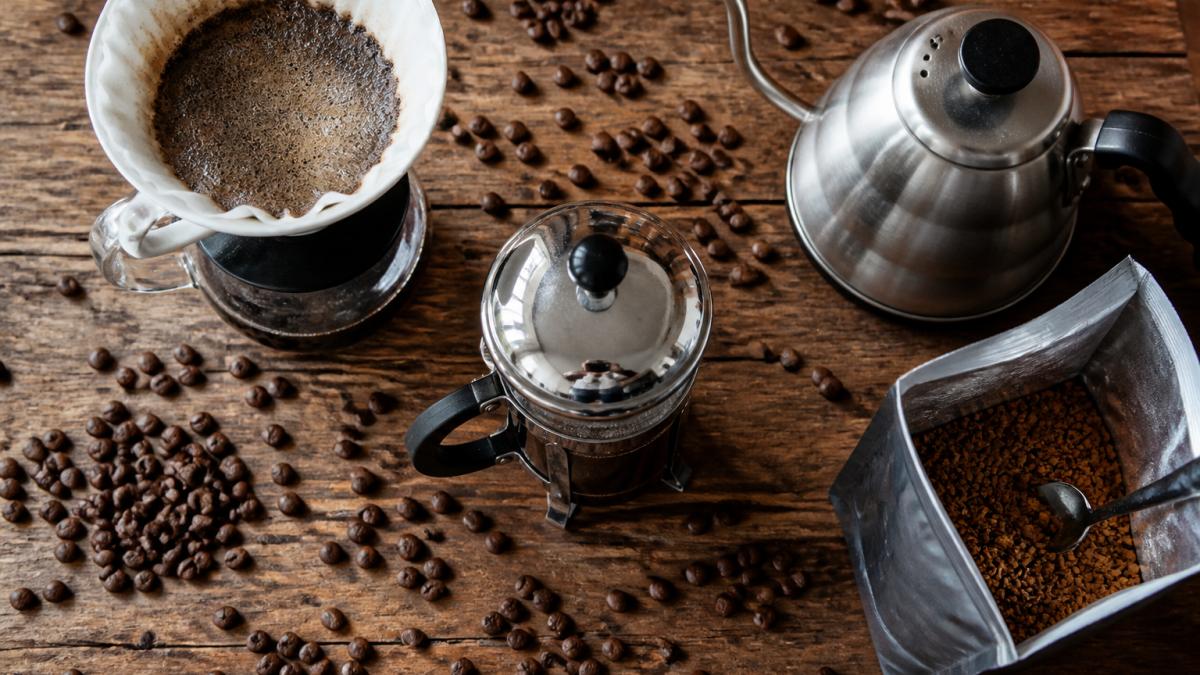
Borosilicate glass resists thermal shock, so it won't crack when you pour hot water into it. Stainless steel offers durability and excellent heat retention.
The choice comes down to preference. Glass lets you watch the brewing process and see the color develop. Stainless steel is more portable and forgiving.
Borosilicate Glass and Stainless Steel Options
Borosilicate glass is the gold standard for brewers who want to see what's happening. A glass French press carafe lets you monitor the bloom, watch the grounds settle, and judge the color as it steeps.
Stainless steel is heavier, more durable, and insulates better than glass. For travel or a high-traffic kitchen where breakage is a concern, it wins. The downside: you can't see inside, so you work from timing and experience rather than visual cues.
Thermal Stability and Durability
Thermal stability matters more than most brewers realize. When you pour hot water over grounds, temperature drops fast, and materials that hold heat longer give more consistent extraction. Both glass and stainless steel perform well, though steel has a slight edge.
Durability is straightforward: stainless steel lasts longer if you're rough with equipment, while glass can chip or crack. Both last years with normal care and will outlive several electric machines.
French Press vs Drip Coffee: Flavor and Body
The French press and pour-over represent two fundamentally different extraction methods. Choosing between them is the key decision when exploring alternatives to electric drip coffee makers.
A French press uses immersion brewing: grounds sit fully submerged in hot water for several minutes, so oils, particles, and flavors extract together.
Pour-over uses percolation: water passes through the grounds once, and paper filters catch most oils and sediment.
Extraction and Full-Bodied Results
Extraction is the process of pulling flavors from the grounds. In a French press, longer steeping time and full water contact mean more extraction. This pulls out the coffee's body, that heavy, satisfying feeling on your tongue.
Full-bodied coffee comes from the oils and fine particles a paper filter would remove. If you love a rich, syrupy cup, a French press delivers it because nothing filters out the heavier compounds.
Sediment and Clean Cup Comparison
Here's where the methods diverge most. A French press has a metal mesh filter that lets fine particles through, so you'll taste a slight grittiness at the bottom of the cup. Some love this texture; others don't.
A pour-over with a paper filter produces a genuinely clean cup: no sediment, no grit, just flavor. If you prefer a smooth, clarified taste, paper filtration is non-negotiable.
Pour-Over Coffee Makers: Control and Clarity
Pour-over brewing puts you in complete control of extraction: bloom time, pour rate, and total brewing time.
The process starts with a bloom: pour just enough hot water to saturate the grounds, then wait 30-45 seconds so CO2 escapes and water penetrates evenly.
This method produces exceptional flavor clarity because you're managing every variable. The result is a cup that tastes clean, balanced, and true to the coffee's origin and roast level.
Bloom, Grind Size, and Brewing Time
The bloom is critical. Wetting the grounds first releases trapped gases; skip it and water channels unevenly, causing under-extraction, a sour, thin cup. A proper 30-45 second bloom fixes this.
Grind size is your main control lever: finer extracts faster, coarser slower.
Water temperature matters too. Aim for 195-205°F (90-96°C): hotter extracts faster and more completely, cooler leaves flavors behind.
Paper Filter vs Metal Mesh
Paper filters are the pour-over standard. They trap oils and fine particles for a clean, bright cup, and they're cheap and disposable, though they create waste. Some compost them; others dislike single-use materials.
Metal mesh filters are reusable, appealing to environmentally conscious brewers. They let slightly more oils through, producing a cup cleaner than French press but richer than paper-filtered pour-over. The trade-off: subtle sediment and cleaning after each use.
Coffee Maker Alternatives for Camping and Travel
Manual brewing becomes genuinely valuable away from home. Portable alternatives to electric drip coffee makers let you brew great coffee anywhere with hot water and a few minutes.
The best travel brewers are lightweight, durable, and need no electricity. A collapsible pour-over dripper, small French press, or AeroPress all fit in a backpack, so remote workers and frequent travelers aren't dependent on hotel coffee or local cafés.
Portability and Consistency on the Go
A collapsible pour-over dripper weighs almost nothing and packs flat.
A compact French press offers similar portability with full-bodied brewing, and some travel presses have locking lids so you can brew, seal, and sip without extra cups.
The key is choosing a method you'll actually use. If you hate fussy equipment, a simple immersion brewer beats a pour-over setup you'll skip because it feels like too much work.
Lightweight Manual Grinders and Pre-Ground Options
Pre-ground coffee is convenient but stales quickly. If you're traveling more than a few days, a manual grinder lets you grind fresh; modern hand grinders are compact, fast, and consistent.
Alternatively, Fairwood Coffee offers Cold Brew Coffee blends specifically formulated for manual brewing methods. Our coarse-ground French roast is ready to brew, no grinder needed.

If you prefer instant coffee for ultimate simplicity, our Instant Coffee delivers 30 servings in a resealable pouch. It's lightweight, shelf-stable, and requires only hot water.

Sustainability, Accessibility, and Cost-Per-Cup
The environmental argument for alternatives to electric drip coffee makers is compelling. Electric machines consume electricity, wear out, and end up in landfills. Manual brewers last decades and consume zero power.
But sustainability isn't just about the machine, it's also the filters, the coffee packaging, and how often you replace equipment.
Environmental Impact and Non-Toxic Materials
Manual brewers made from borosilicate glass or stainless steel are inherently sustainable: they don't degrade, don't leach chemicals, and last 10-20 years or longer, versus an electric machine's typical 5-7 years before the heating element fails or the carafe cracks.
Paper filters are compostable but single-use; metal mesh filters eliminate waste but need more frequent cleaning. Glass or stainless steel brewers produce zero filter waste with a reusable metal filter.
The coffee itself matters too. Fairwood Coffee's artisan blends come in compostable or recyclable packaging. Pair that with a durable manual brewer to minimize your environmental footprint.
Ease of Cleaning and Long-Term Maintenance
This is where manual brewers shine. A French press takes 30 seconds to clean: empty the grounds, rinse, dry. A pour-over dripper rinses in seconds.
Electric machines require regular descaling to remove mineral deposits. Neglect this, and your machine becomes a breeding ground for mold and bacteria. Manual brewers don't have these problems.
Long-term maintenance is minimal: replace the metal mesh filter every few years if damaged. No repairs, no replacement parts, no service calls.
Budget-Friendly Manual Brewing and Cost Analysis
A quality pour-over dripper or French press typically costs 20-50 dollars, versus 80-150 for a decent electric machine. The manual brewer pays for itself in reduced electricity costs and eliminated replacement cycles.
Cost-per-cup depends on the coffee. Our Peru Coffee Pods at 19.99 deliver a single-origin cup with notes of salted caramel, silky sweetness, and citrus, specialty café quality at home.
Over a year, manual brewing with quality coffee costs less than a daily café visit.
Comparison Table: Manual Brewing Methods
| Method | Brew Time | Cup Style | Cleanup | Best For | Portability |
|---|---|---|---|---|---|
| French Press | 4 minutes | Full-bodied, rich | 1 minute | Flavor lovers | Moderate |
| Pour-Over | 3-4 minutes | Clean, bright | 30 seconds | Precision brewers | High |
| Instant Coffee | 2 minutes | Convenient | Immediate | Travel, speed | Excellent |
| AeroPress | 2-3 minutes | Balanced | 1 minute | Versatility | Excellent |
| Immersion (cold brew) | 12-24 hours | Smooth, sweet | 2 minutes | Batch brewing | Good |
Choosing Your Alternative: A Decision Framework
Your choice depends on three factors: time, flavor preference, and portability.
For a rich, full-bodied cup and you don't mind slight sediment, choose a French press. For clean, bright coffee and the ritual of hand-pouring, go pour-over.
For travel and remote work, a lightweight pour-over dripper or collapsible French press lets you brew great coffee anywhere. Pair it with Fairwood Coffee's Cold Brew Coffee blends or Instant Coffee and you have everything you need in a backpack.
The real advantage of alternatives to electric drip coffee makers isn't that they're trendy.
Our Mexico Coffee Pods deliver medium acidity and creamy body with notes of lemon, brown sugar, and dark chocolate.

Frequently Asked Questions
What are the best alternatives to electric drip coffee makers for daily use?
Manual brewing methods like French press, pour-over, and instant coffee offer practical alternatives. French press produces a full-bodied cup with rich flavor extraction, while pour-over delivers clarity and acidity control through precise grind size and water temperature. For convenience, instant coffee requires only hot water and delivers consistent results in seconds. Each method suits different preferences: French press for bold taste, pour-over for flavor clarity, and instant for speed. Fairwood Coffee's Cold Brew Coffee and Single Serve Coffee Capsules work with multiple brewing approaches to match your chosen method.
Is a French press a good alternative to a drip coffee maker?
Yes, French press is an excellent alternative that produces distinctly different results. Where drip coffee relies on paper filters for a clean cup, French press uses immersion brewing with a metal mesh filter, creating a full-bodied coffee with more sediment and richer mouthfeel. The trade-off: French press requires more cleanup and the sediment affects the final taste. If you prefer bold, thick coffee with pronounced tasting notes like chocolate and molasses, French press offers a distinct experience. It's also more durable and requires no electricity.
What makes pour-over coffee better than drip coffee?
Pour-over and drip both use paper filters for clean extraction, but pour-over gives you direct control over brewing variables: water temperature, grind size, bloom time, and drip rate. This control produces flavor clarity and acidity that automatic drip machines cannot match. You decide the coffee-to-water ratio and aeration, adjusting for different beans and roasts. Drip machines are convenient but standardized; pour-over requires attention. For discerning coffee enthusiasts, pour-over's manual control justifies the extra effort.
Are non-electric coffee makers sustainable and cost-effective?
Non-electric coffee makers are highly sustainable and cost-effective. They eliminate electricity consumption, last for years with proper maintenance, and use non-toxic materials like borosilicate glass and stainless steel. Cost-per-cup is significantly lower than electric machines: manual brewers require only beans and water. French press and pour-over equipment costs $15-50 upfront, then just the coffee expense continues. Instant coffee and Cold Brew options from Fairwood Coffee start at $20.99, offering 30 servings or more per pouch. Over a year, manual brewing reduces environmental impact.
Which manual brewing method is easiest for beginners?
Instant coffee is the easiest entry point: add hot water, stir, and drink in under two minutes with zero equipment. For slightly more involved but still beginner-friendly methods, pour-over requires only a dripper, filter, and gooseneck kettle, with straightforward steps: bloom grounds, pour slowly, wait for drip. French press is equally simple mechanically but demands more attention to water temperature and steeping time. If you prefer pre-measured convenience, Fairwood Coffee's Single Serve Coffee Capsules eliminate guesswork entirely while avoiding electricity dependence.