

Smart Alternatives to Expensive Espresso Machines at Home
Last Updated: November 7, 2026
Quick Summary
The best alternatives to expensive espresso machines are moka pots, AeroPress, pod systems, French press, pour-over and cold brew, which trade upfront cost for hands-on brewing or per-cup pod bills. Compare total cost of ownership, including grinder, accessories, maintenance and beans, not just the sticker price.
- A moka pot is the cheapest route to a strong, espresso-style cup with no electronics or pods.
- AeroPress costs less than a pump machine and lets you control water temperature, steep time and pressure.
- Pod systems are convenient but the per-cup price usually runs higher than ground coffee.
- A decent burr grinder can cost more than the brewer itself, tilting per-cup math toward manual methods.
- Match the setup to the drink: cold brew suits iced drinks, while lattes need a concentrated base plus a frother.
Table of Contents
- Why Home Brewers Are Rethinking the Espresso Machine
- Moka Pot Coffee Maker: Stovetop Espresso-Style on a Budget
- AeroPress and Manual Brewing for Espresso-Style Coffee Without a Machine
- Pod and Capsule Systems: Convenience With a Recurring Bill
- French Press, Pour-Over and Cold Brew: Low-Cost Brewing Methods
- Cost Per Cup: What Alternatives to Expensive Espresso Machines for Home Really Save
- Milk Drinks and Drink Compatibility: Lattes, Cappuccinos and Crema
- Choosing Your Coffee Setup With Fairwood Coffee
- Frequently Asked Questions
Why Home Brewers Are Rethinking the Espresso Machine
The coffee machine market is projected to grow from USD 20.03 billion in 2026 to USD 26.77 billion by 2031, at a 5.97% CAGR, according to Mordor Intelligence's coffee machine market forecast. That growth hides a quieter shift: plenty of home brewers are hunting for alternatives to expensive espresso machines rather than saving up for one. At Fairwood Coffee, we see the same pattern in what people ask us before they buy beans.
The math is simple. A super-automatic espresso machine costs substantially more than other high-end coffee makers, a gap Food & Wine's super-automatic espresso machine review notes without ever putting a number on it. Cheap to buy is not the same as cheap to own.
Below, we break down each alternative by upfront cost, ongoing cost, and how close it gets to real espresso. The last one matters more than most guides admit.
Moka Pot Coffee Maker: Stovetop Espresso-Style on a Budget
A moka pot coffee maker is the cheapest route to a strong, espresso-style cup: a stovetop brewer with no electronics, no pods, and almost nothing to break. You fill the base with water, add ground coffee to the basket, and set it on the hob.
It does not produce true espresso. Brew pressure stays far below what a pump machine generates, so expect a bold, concentrated coffee rather than a thick crema.
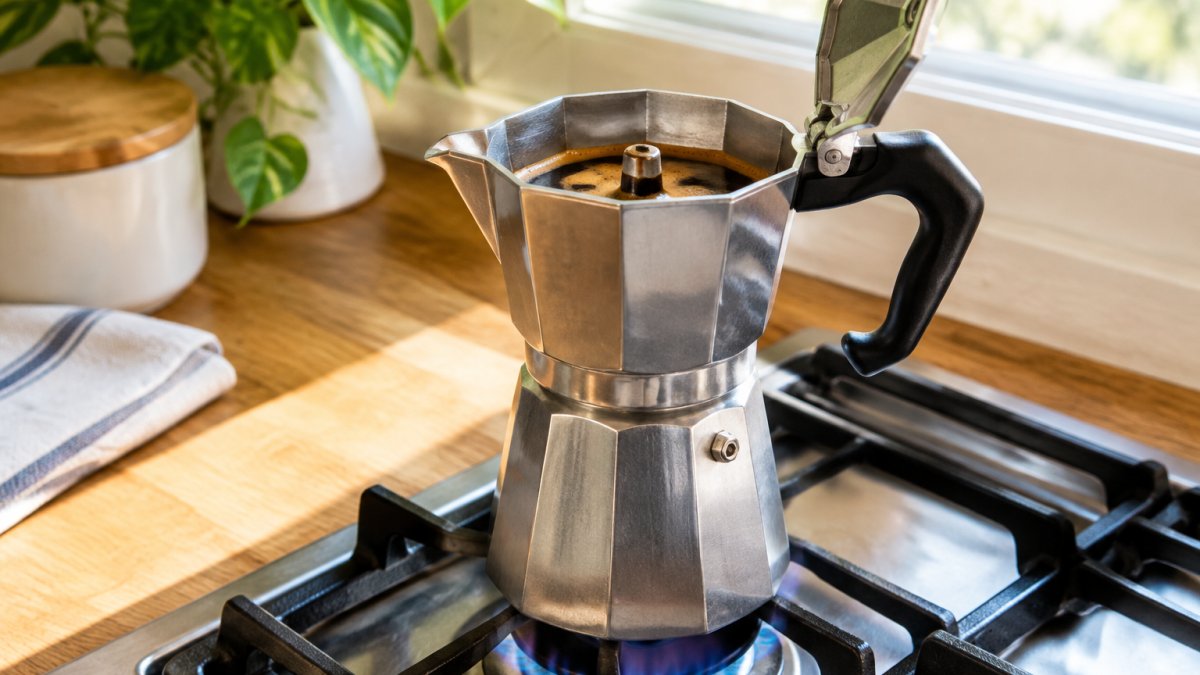
Pair it with a dark, espresso-friendly blend such as our 6 Bean Blend. Watch out: grinding too fine clogs the basket and pushes water past the safety valve, so keep the grind medium-fine.
AeroPress and Manual Brewing for Espresso-Style Coffee Without a Machine
Manual brewing gets you espresso-style coffee without a machine at all. The AeroPress uses air pressure from a plunger to push water through grounds, and it costs less than a pump machine.
The result is concentrated and smooth, closer to a strong filter coffee than a true shot. What most guides miss is the control: you set water temperature, steep time, and pressure yourself, which is exactly what a home barista wants and exactly what a beginner finds fiddly.
For a repeatable process, follow our guide on how to extract espresso step by step at home. A medium grind and water just off the boil (around 85-90°C) give the best balance. Too hot and you scorch the grounds; too cool and the cup tastes flat.

Pod and Capsule Systems: Convenience With a Recurring Bill
Capsule coffee wins on ease of use and loses on ongoing cost. A pod system is convenient for a tight kitchen and a busy morning.
The catch is the recurring bill. Pods lock you into one format, and the per-cup price usually runs higher than ground coffee, which is the trade-off that r/coffee commenter flagged. Counter space is minimal; the cost of ownership is not.
Our 60 Pack Single Serve Coffee Capsules are priced at $64.99, and our 12 Pack Single Serve Coffee Capsules at $19.99. Each capsule is sealed with no oxygen inside so the coffee stays fresh. The improved filter design absorbs more grounds for a lively cup without slowing down the brew time. Watch out: check capsule compatibility with your machine before ordering in bulk.
French Press, Pour-Over and Cold Brew: Low-Cost Brewing Methods
Low-cost brewing methods cover a wide spread of gear, and each one lands at a different point on the strength scale. A French press steeps grounds in hot water and presses them down; pour-over drips water through a filter for a cleaner cup; cold brew steeps in cold water for hours and yields a smooth concentrate.
None of them make espresso. Kofio's alternative brewing overview lists seven categories of manual and alternative brewers, from AeroPress to moka pot to French press, and the range is the point.
| Method | Upfront Cost | Ongoing Cost | Brew Strength | Best For |
|---|---|---|---|---|
| Moka pot | Low | Low | Strong, concentrated | Espresso-style on a budget |
| AeroPress | Low | Low | Medium-strong | Manual control |
| Pod system | Medium | High | Medium | Speed and convenience |
| French press | Low | Low | Medium-full | Rich, unfiltered body |
| Pour-over | Low | Low | Medium | Clean, bright flavor |
| Cold brew | Low | Low | Smooth concentrate | Iced drinks, milk drinks |
| Instant coffee | Very low | Very low | Light-medium | Zero equipment |
Choose your beans to match the method. Our coffee for French press brewing guide covers the coarser grind a press needs, and our best coffee for cold brew notes explain which beans hold up over a long steep.
Cost Per Cup: What Alternatives to Expensive Espresso Machines for Home Really Save
Alternatives to expensive espresso machines for home save the most money when you count cost per cup, not just the sticker price. A machine spreads its purchase price across daily shots; a pod system spreads a smaller price across a higher per-cup bill. The only honest way to compare is total cost of ownership: purchase price plus grinder, accessories, maintenance, and the beans or pods you actually burn through.
That second number is where most comparisons fall apart, because a cheap brewer with pricey pods can lose to a pricier brewer with cheap ground coffee.
A common pattern is that the grinder is the hidden line item. A moka pot or AeroPress is inexpensive, but a decent burr grinder can cost more than the brewer itself; if you already own one, the per-cup math tilts heavily toward manual methods. Pod systems invert this: the brewer is cheap, but the pods carry the cost, and you cannot grind your way out of it. French press, pour-over, and cold brew sit in the middle, low gear cost, low per-cup cost, but more hands-on time and, for pour-over, a gooseneck kettle and scale that most guides omit.
- Moka pot or AeroPress: low upfront, low per cup, no pods; add a burr grinder if you do not own one
- Pod system: medium upfront, highest per cup; the brewer is subsidized by the pod bill
- French press, pour-over, cold brew: low upfront, low per cup, more hands-on time; pour-over may need a gooseneck kettle and scale
- Instant coffee: lowest upfront and per cup, weakest flavor
Watch out: comparing only the brewer's sticker price against an espresso machine's sticker price ignores the grinder, the pods, and the maintenance that actually decide which setup is cheaper to own.
Milk Drinks and Drink Compatibility: Lattes, Cappuccinos and Crema
Milk drinks are where the gap between espresso and its alternatives shows up most. A latte or cappuccino depends on a concentrated base that stands up to steamed milk, plus a crema layer for texture. Which alternative you pick should follow from which drink you actually order.
It will not give you true crema, because crema comes from brew pressure, and a stovetop brewer cannot replicate the pressure a pump machine generates. An AeroPress can be brewed concentrated by using less water and a finer grind, and it makes a serviceable cappuccino base, but it is closer to a strong filter coffee than a true shot. French press and pour-over are too dilute to anchor a milk drink unless you brew them strong and accept a thinner result; cold brew concentrate works well for iced lattes because its smoothness carries milk without turning bitter.
Pod systems are the most forgiving route to milk drinks because many include a built-in frother and dose consistently, which is why they suit a busy morning. The trade-off is the recurring pod bill covered above.
Choosing Your Coffee Setup With Fairwood Coffee
Match the setup to the drink, not to the machine's spec sheet. That is the rule we would give any home brewer weighing alternatives to expensive espresso machines, and it saves more money than any single purchase decision.
Start with what you actually drink. Black coffee and Americanos suit a moka pot, AeroPress, or pour-over. Lattes and cappuccinos need a concentrated base plus a frother. Iced drinks point to cold brew. Once the method is settled, the beans follow, and that is where Fairwood Coffee fits: artisan blends shipped straight to your door with fast, automated fulfillment.
Our 10 essential tools for a professional home coffee bar covers the rest of the kit. Watch out: buying gear before you know your drink of choice is the most common way to waste money on a setup you abandon in a month.
The real challenge is not picking a brewer. It is keeping good coffee in the house without a subscription that piles up in the pantry. Fairwood Coffee solves that with artisan coffee blends, premium branded gear, and fast, automated fulfillment that ships straight to your door, so you never manage inventory yourself. Start with a capsule pack or a bag of espresso-friendly beans and build from there. Get started with Fairwood Coffee and brew a better cup without the machine.
Frequently Asked Questions
Can you make espresso-style coffee without an espresso machine?
You can get close in strength and flavor, though not identical. A moka pot brews at low pressure on a stovetop and produces a concentrated, bold cup. An AeroPress with a fine grind and short steep time delivers a similar intensity. Neither creates true 9-bar espresso or the thick crema a pump machine produces, but both work well as espresso machine alternatives for milk drinks and everyday drinking.
Is an AeroPress or moka pot a better alternative to an espresso machine?
It depends on your routine. The AeroPress is more versatile: you control grind, water temperature and steep time. The moka pot coffee maker suits anyone who wants a hands-off stovetop brew and a larger volume per batch. For a single quick cup with manual control, pick the AeroPress. For two or three concentrated cups at once, the moka pot is simpler.
Which brewing method is best for making milk drinks at home?
You need a concentrated base that holds up against milk. Moka pot coffee and AeroPress brews made with a fine grind and short ratio both work for lattes and cappuccinos. Fairwood Coffee's 6 Bean Blend is a dark roast house blend, and African Espresso is a medium-dark blend from Kenya, Tanzania and Ethiopia. Pair either with a standalone milk frother.
Does a more expensive espresso machine really make a difference?
Above a certain point, most of the extra spend buys temperature stability, pressure consistency and build quality rather than a fundamentally different drink. The grinder and the beans usually matter more to flavor than the machine's price tag. That is why so many home brewers test cheaper methods first. A manual brewer plus freshly roasted beans often beats a costly machine paired with stale supermarket coffee.
How much does a pod system really cost over time?
The machine is the cheap part. Fairwood Coffee's 60 Pack Single Serve Coffee Capsules cost $64.99, and the 12 Pack is $19.99. Compare that per-cup figure against a bag of whole bean coffee before committing.
