

How to Steam Milk Without a Steam Wand: 4 Home Methods
Last Updated: November 19, 2026
Quick Summary
To steam milk without a steam wand, heat the milk first and aerate it second, since shaking cold milk makes bubbles that collapse before you pour. Warm the milk to 135-145°F, then froth it with a jar, French press, whisk, or handheld frother. A handheld frother gives the closest result to a steam wand.
- Microwave milk in short bursts, stirring between each one, and stop when the mug feels warm against your wrist.
- Shake a lidded jar of warm milk hard for 20 to 30 seconds, then rest it a minute so large bubbles pop.
- Plunge a French press firmly for 20 to 30 seconds, keeping the mesh below the surface, for foam in under a minute.
- Skim and 2% milk foam more easily than whole milk because their bubbles stay smaller.
- Milk proteins lose foam-holding ability around 150-155°F, so stop heating at warm-to-touch.
Table of Contents
- Frothing vs Steaming: What You're Actually Trying to Achieve
- How to Steam Milk Without a Steam Wand in the Microwave
- The Jar Shake Method: Foam With Nothing But a Lid
- How to Steam Milk at Home With a Frother
- How to Froth Milk Without a Frother or Whisk
- How to Steam Milk Without a Steamer for Latte Art
- Choosing Your Milk and Fixing Foam That Fails
- Pair Your New Foam With Coffee Worth Steaming For
- Frequently Asked Questions
Frothing vs Steaming: What You're Actually Trying to Achieve
Steaming milk means injecting hot steam to heat it and fold in fine air, while frothing means adding air by mechanical means alone. A steam wand does both at once. Without one, you split the job: heat the milk first, then aerate it.
That split matters. Most failed attempts at how to steam milk without a steam wand come down to one mistake: shaking cold milk and hoping. Cold milk holds air poorly and the bubbles collapse before you pour.
Here is what you are aiming for:
- Microfoam: tiny bubbles, glossy surface, pours like wet paint
- Temperature: warm to the touch, never scalding
- Texture: thick enough to hold a spoon, fluid enough to pour
The question home brewers ask most is simple: why does café milk taste better? Usually it is texture, not the beans. Below, we cover four home methods, the milk that works best, and how to fix foam that fails.
How to Steam Milk Without a Steam Wand in the Microwave
Microwave heating is the fastest route to warm milk for frothing. Heat first, froth second, and never microwave milk you have already frothed.
One published approach, from a food science write-up on creating microfoam without a steamer, heats milk for 50 seconds, waits three minutes, then heats it for another 20 seconds. The rest period lets heat spread evenly so the milk warms through without boiling at the edges.
Follow these steps:
- Pour milk into a microwave-safe mug, filling it no more than halfway
- Heat in short bursts, stirring between each one
- Stop when the mug feels warm against your wrist
- Froth immediately with a jar, whisk, or frother
Watch out: milk can superheat and bubble over in seconds. Use a mug with room to expand, and never seal a lid on hot milk before frothing.
The Jar Shake Method: Foam With Nothing But a Lid
The jar method needs a lidded jar, milk, and about 30 seconds of vigorous shaking. It is the cheapest way to get frothed milk at home, and it works best with warm milk.
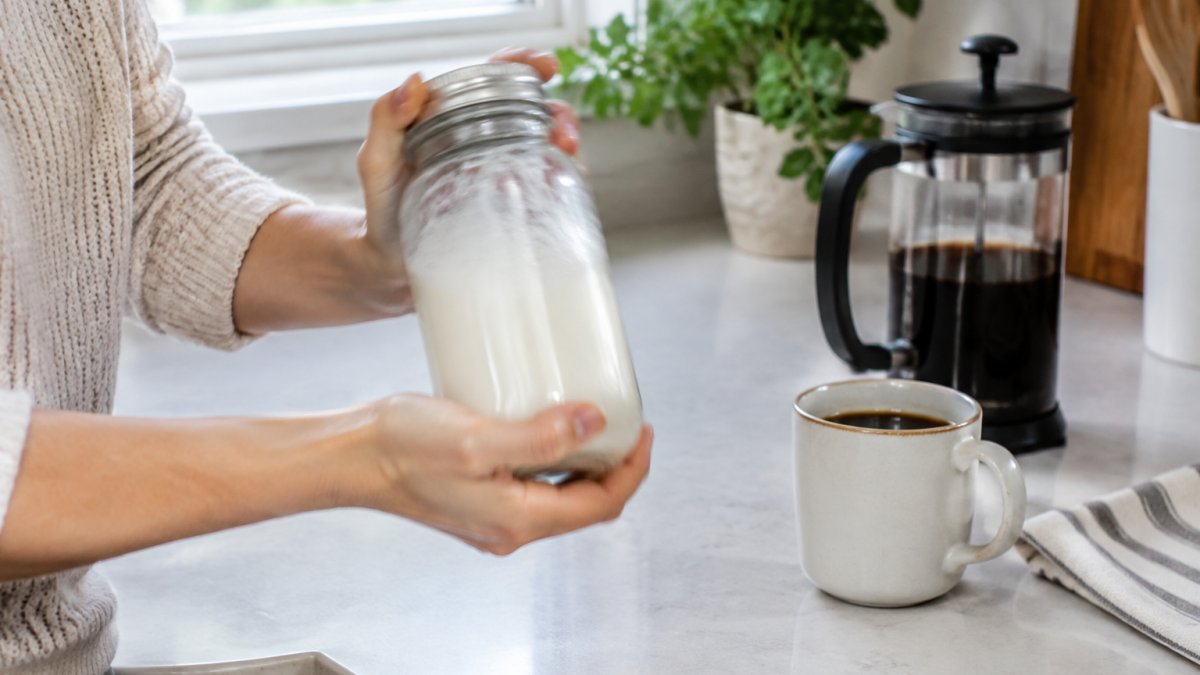
The process is simple:
- Fill a jar halfway with warm milk, leaving room to expand
- Screw the lid on tight
- Shake hard for 20 to 30 seconds until the milk doubles in volume
- Let it rest for a minute so large bubbles rise and pop
- Swirl and pour
One coffee drinker on a home barista discussion about steaming milk without a machine called the French press trick "a PITA" but found jar shaking preferable. That is one person's take, not a test result, but it tracks with the method's appeal: no cleanup beyond a rinse.
The trade-off is texture. Jar foam tends to be looser than microfoam, so it suits a cappuccino better than delicate latte art.
How to Steam Milk at Home With a Frother
A handheld milk frother is the closest thing to a steam wand you can hold in one hand. It spins a small whisk head that pulls air into the milk and breaks big bubbles into fine ones.
Here is how to steam milk at home with a frother:
- Warm the milk first, either in the microwave or on the stove
- Submerge the whisk head just below the surface
- Turn it on and move it in slow circles for 15 to 30 seconds
- Tilt the frother so the head sits at the surface for the first few seconds to pull in air
- Tap the pitcher on the counter to knock out large bubbles
A common mistake is frothing cold milk. It whips up fast but the foam separates within a minute. Warm milk holds its structure.
If you are building out a home setup, our guide to essential tools for a professional home coffee bar covers what else earns counter space.
How to Froth Milk Without a Frother or Whisk
A French press is the best no-electricity option. Its mesh plunger works like a stack of tiny whisks, and the whole job takes under a minute.
The method:
- Warm milk and pour it into the French press, filling it no more than a third
- Put the lid on with the plunger pulled up
- Plunge up and down firmly for 20 to 30 seconds, keeping the mesh below the surface
- Pour straight into your coffee
A hand whisk works too, though it takes longer and more wrist effort. An electric whisk is faster but tends to create larger bubbles, so tap the jug and let it rest before pouring.
Not every method delivers microfoam. A poster on an espresso forum thread on getting silky milk without a steamer reported failing to reach microfoam with both a handheld frother and a French press. That is one anecdote, but it points to a real limit: these methods make good foam, not identical foam.
How to Steam Milk Without a Steamer for Latte Art
Pourable microfoam is possible without a machine, but the margin for error is thin. The goal is foam so fine it blends into the milk, not sits on top of it.
Temperature is the first lever. Milk proteins begin to denature and lose their ability to hold foam somewhere around 150-155°F (65-68°C), and above that the foam turns stiff and eventually collapses.
Milk choice changes the ceiling. Skim and 2% milk foam more easily than whole milk because their bubbles stay smaller and the foam is less weighed down by fat.
Aerate in small increments. With a handheld frother, submerge the whisk head just below the surface for the first 3-5 seconds to pull in air, then lower it to break the large bubbles into fine ones. With a French press, plunge firmly but keep the mesh below the surface so you fold air in rather than whipping it. With a jar, shake hard for 20-30 seconds, then rest a full minute so large bubbles rise and pop before you pour.
Pour technique decides the pattern. Pour low and slow, keeping the spout close to the surface of the espresso.
Watch out: if the foam sits in a clump instead of blending, the milk was likely overheated or overfrothed, start over with fresh milk rather than trying to rescue it.
For the base, start with properly extracted espresso. Our walkthrough on how to extract espresso step by step at home covers dose, grind, and timing so the shot does not undermine the foam.
Choosing Your Milk and Fixing Foam That Fails
Milk type changes everything. Dairy milk foams best because its proteins, mainly casein and whey, form a stable structure around each air bubble, and fat content affects how rich and stable that structure is. Skim and 2% milk foam more easily and hold finer bubbles; whole milk gives a creamier texture but a shorter window before the foam separates.
Match the method to your equipment, time, and texture goal.
- Jar shake: cheapest, no electricity, about 30 seconds of shaking plus a minute of rest. Best for cappuccino-style foam; looser texture, not ideal for latte art.
- French press: no electricity, under a minute of plunging, better bubble structure than a jar. Good all-rounder for home use.
- Hand whisk: more wrist effort and time, but fine control over aeration. Suits small batches.
- Electric whisk: fast but tends to create larger bubbles; tap the jug and rest before pouring.
- Handheld milk frother: closest to a steam wand in one hand, 15-30 seconds, best control for microfoam and latte art.
- Microwave plus any of the above: fastest route to warm milk, but requires short bursts and stirring to avoid hot spots.
Troubleshooting weak, large-bubbled, or collapsing foam.
| Problem | Likely Cause | Fix |
|---|---|---|
| Weak, flat foam | Milk was cold or underheated | Warm the milk to 135-145°F before frothing |
| Large bubbles that pop | Too much air pulled in at once | Tap the jug, rest 30 seconds, swirl |
| Foam collapses fast | Milk overheated or overfrothed | Heat gently, stop at warm-to-touch |
| Foam sits in a clump | Not enough agitation | Shake or plunge longer |
| Foam separates within a minute | Cold milk or non-barista plant milk | Use warm milk and a barista-style alternative |
Food safety and container guidance. Only microwave in containers marked microwave-safe, and never microwave milk in a sealed jar, remove the lid and leave room for expansion. Milk can superheat and bubble over in seconds, so heat in short bursts and stir between them.
Two safety notes. Only microwave in containers marked microwave-safe, and never microwave milk in a sealed jar. Also, foam holds best when the milk is fresh; our guide to storing artisan coffee beans covers keeping your coffee side of the equation in good shape too.
Pair Your New Foam With Coffee Worth Steaming For
Good foam cannot rescue dull coffee. The roast you choose shapes how the milk tastes in the cup, and lighter roasts cut through milk better than dark, smoky ones.
If you are new to espresso, our roundup of the best coffee roasts for espresso beginners explains which profiles hold up under milk. And if a machine is not in the plan, smart alternatives to expensive espresso machines at home covers ways to get a strong base without the counter footprint.
At Fairwood Coffee, we offer artisan coffee blends delivered straight to your door with fast, automated fulfillment, so you have no inventory to manage.
The hardest part of milk without a wand is consistency: one day the foam is silky, the next it collapses. Fairwood Coffee removes the variable you can control least, the coffee itself, with artisan blends and fast automated fulfillment delivered straight to your door. You get fresh beans on a schedule you set, plus premium branded gear if you want it.
Frequently Asked Questions
Can I steam milk without a wand?
You can't produce true steamed milk without a steam wand, because steaming injects hot pressurised steam directly into the milk. What you can do is froth milk to a similar texture using a jar, microwave, French press, or handheld frother. The result is aerated, warmed milk with foam on top, which works well in most coffee drinks. The main difference is that wand steaming creates finer microfoam that holds latte art more easily.
What is the easiest way to steam milk at home?
A handheld electric frother is the fastest route for most people: heat the milk, submerge the whisk, and run it for 15 to 30 seconds. If you don't own one, the jar shake method needs only a lidded jar and 30 seconds of vigorous shaking. The French press method gives more control over texture but takes longer to clean. Pick based on the equipment already in your kitchen.
Can you steam milk in a microwave?
You can heat milk in a microwave, then froth it separately by shaking or whisking. One published method heats milk for 50 seconds, waits 3 minutes, then heats it for another 20 seconds before frothing. Always use a microwave-safe container with room for the milk to expand, and never microwave a sealed jar. Heating alone doesn't create foam, so plan a frothing step after.
How do you froth milk without a frother or whisk?
Shake it in a lidded jar. Fill the jar no more than halfway so the milk has room to expand, shake hard for 30 seconds, then microwave the jar without the lid for 30 to 45 seconds to set the foam. A French press works too: pump the plunger vigorously for 20 to 30 seconds. Both methods produce foam from nothing but the milk and the motion.
